How to Reach Out on LinkedIn Without Being Salesy (The Relationship-First Method)
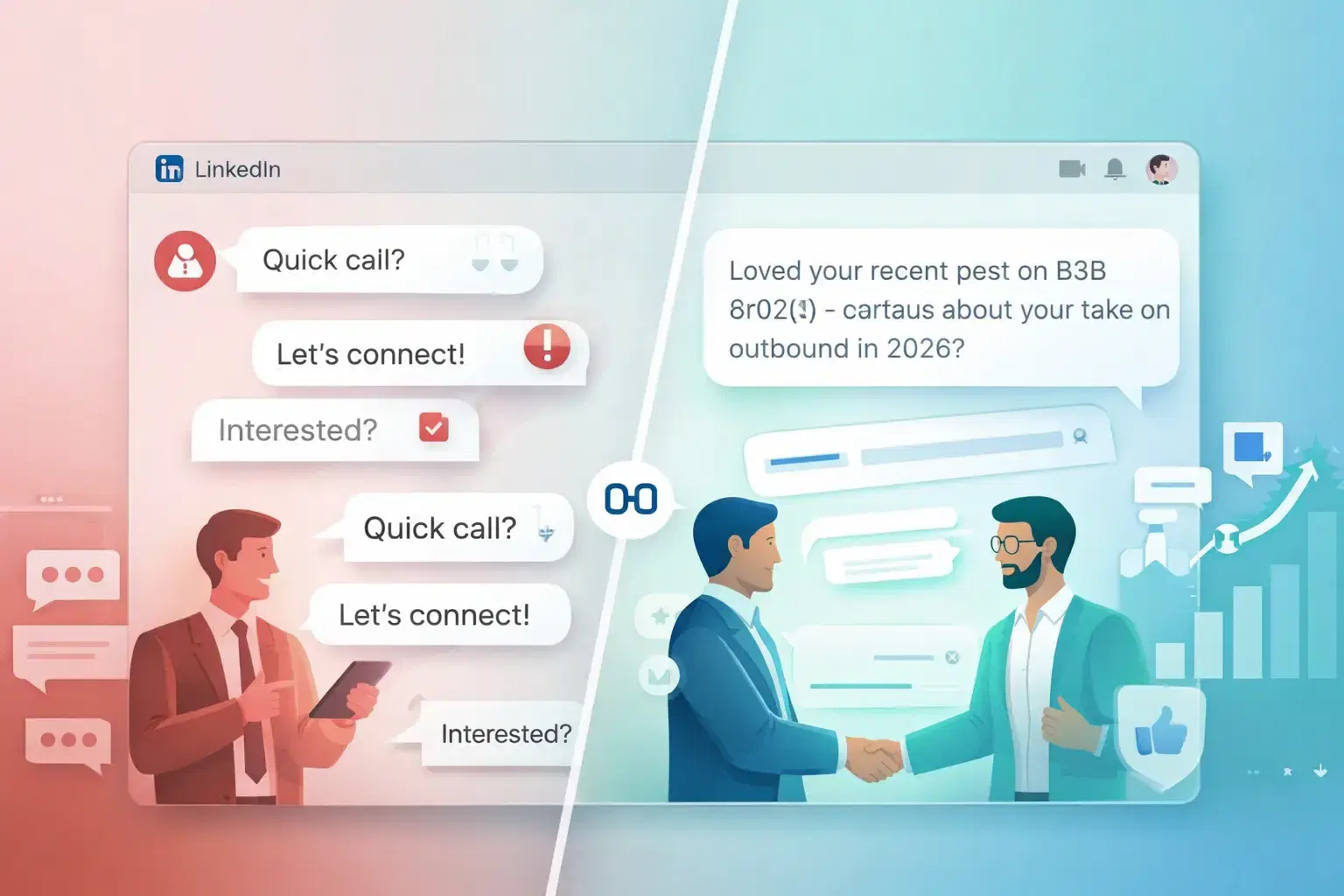
Stop treating LinkedIn like a transaction machine.
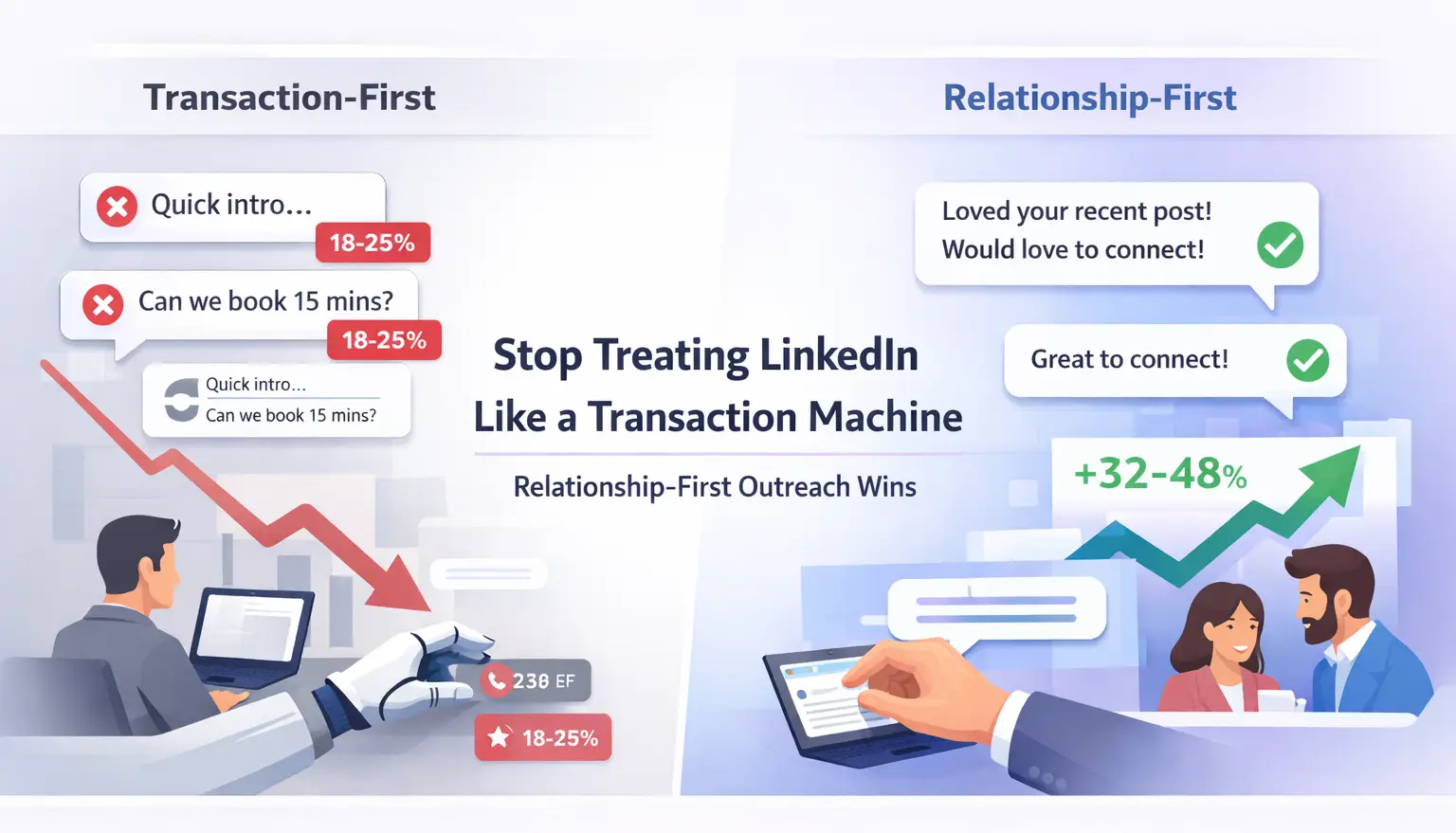
The relationship-first method shifts your focus from immediate sales to genuine value exchange, resulting in 32-48% higher reply rates and better quality conversations that convert naturally.
Before implementing this approach, understand the fundamentals of LinkedIn automation to avoid common mistakes.
TL;DR: Key Takeaways
- Personalized LinkedIn messages achieve 35-55% acceptance rates versus 18-25% for generic pitches
- “Relationship-first outreach” focuses on curiosity, relevance, and value before asking for anything
- Messages under 150 characters with specific context get 22% more replies than long sales pitches
- Connection requests referencing recent activity boost response rates by 32%
- Multi-step sequences that build relationships perform 42% better than single-message flows
Why Most LinkedIn Outreach Feels Salesy
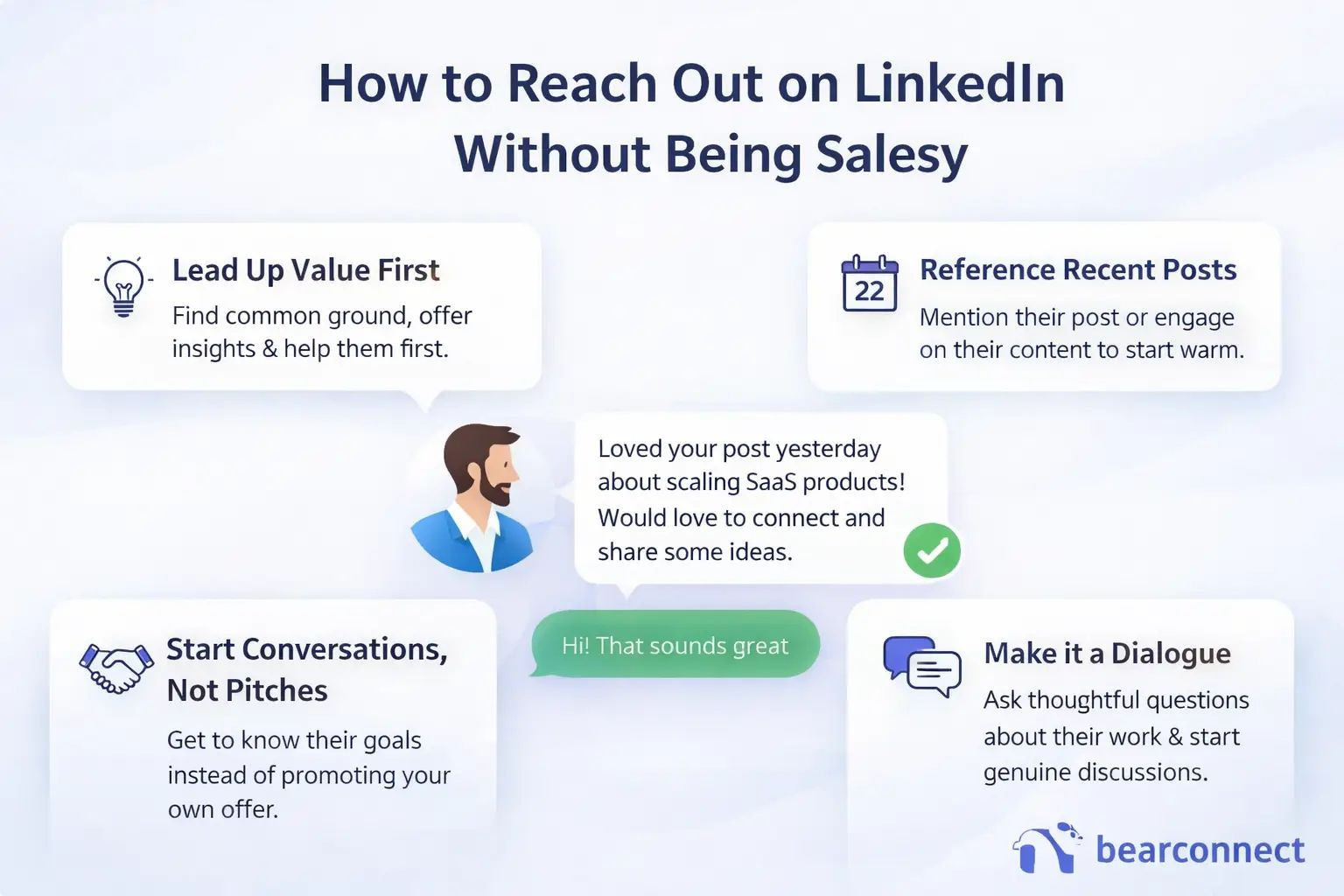
Your DMs are getting ignored because prospects receive 15+ identical "personalized" messages daily.
Everyone uses the same playbook:
- "I loved your recent post about..."
- "I hope this message finds you well..."
- "I'd like to pick your brain..."
- "Let me know if you'd like to schedule a call"
These phrases scream automation. Prospects can smell fake personalization from miles away.
The Core Problem: Transaction-First Mindset
Most LinkedIn outreach fails because it prioritizes your needs over theirs.
- You want their time. You want their business. You want a meeting.
What does the prospect want? Nothing from you. Yet.
Sales-focused messages trigger instant rejection because they demand before they deliver.
The prospect has zero relationship with you, zero trust in your expertise, and zero reason to care about your solution.
The Pitch Mindset Versus Conversation Mindset
Pitch mindset says:
- "Here's what I do"
- "Let me show you our solution"
- "Can we schedule a 15-minute call?"
Conversation mindset asks:
- "What's working for you right now?"
- "How are you handling [specific challenge]?"
- "Have you found [particular approach] effective?"
The first sells. The second connects.
The Relationship-First Framework
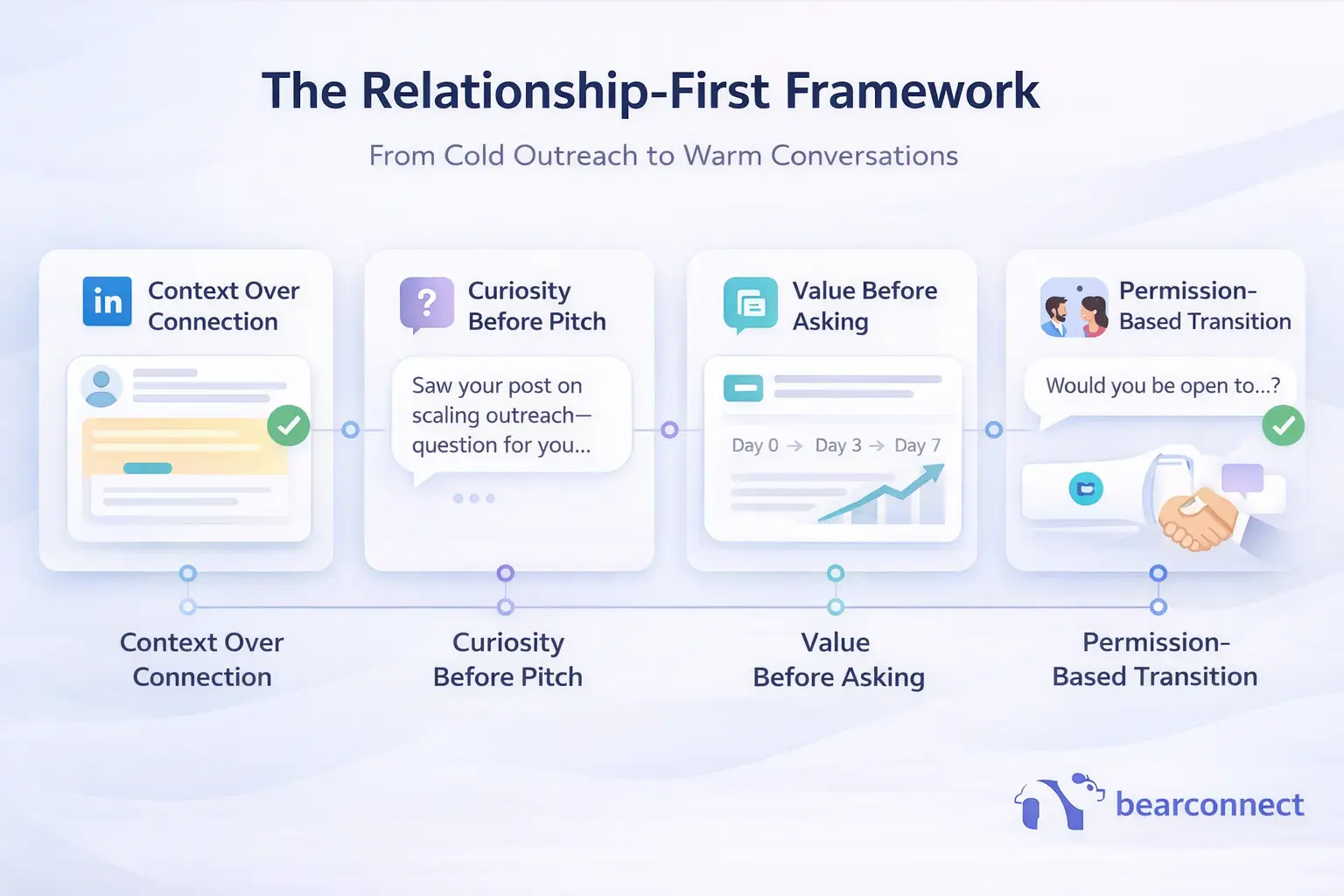
This framework transforms cold outreach into warm conversations by earning attention before requesting it.
Stage 1: Context Over Connection Requests
Send connection requests that demonstrate genuine interest, not generic templates.
Bad example:
"Hi John, I help B2B companies generate more leads. Let's connect!"
Good example:
"Noticed we're both focused on LinkedIn lead generation. Your approach to content distribution caught my attention. Open to connecting?"
The difference? Specificity. The second message references something real about their work.
Pro tip: Visit their profile, like a recent post, or comment thoughtfully before sending a connection request. This warm approach sees 30.2% higher acceptance rates.
Learn more about crafting connection requests that don't get ignored.
Stage 2: Curiosity Before Pitching
Your first message should never sell.
Instead, ask about their experience, challenges, or perspective on industry trends.
Framework:
- Reference something specific about them
- Ask a relevant question
- Keep it under 150 characters
Example:
"Your post on scaling outreach resonated. What's been your biggest challenge automating without losing authenticity?"
This works because:
- You proved you read their content
- You're asking, not telling
- You're showing genuine curiosity about their experience and personalizing your LinkedIn outreach messages effectively.
Stage 3: Value Before Asking
Provide something useful before requesting anything.
Share an insight. Send a relevant article. Offer a quick tip related to their challenge.
Example sequence:
- Day 0: Connection request with context
- Day 3: "Saw you're expanding your team. Here's a framework we used to scale from 2 to 10 reps without sacrificing quality [link]"
- Day 7: Follow up only if they engaged: "Curious if that framework was helpful?"
Notice what's missing? No pitch. No meeting request. Just value.
This approach works exceptionally well when you automate LinkedIn connections while maintaining personalization.
Stage 4: Permission-Based Transition
When the conversation naturally opens, ask permission before discussing business.
Example:
"Based on what you mentioned about [specific challenge], I think our approach to [solution] might be relevant. Would you be open to hearing how it addresses that specific issue?"
This respects their time and positions you as helpful, not pushy.
Message Structure That Works
Keep messages short, specific, and conversational.
What High-Performing Messages Include
1. Specific context:
Reference their recent activity, role change, or company news. Messages tied to recent activity boost response rates by 32%.
2. Conversational tone:
Write like you're messaging a colleague, not sending a marketing email.
3. Single clear question:
Make it easy to respond. One question beats three questions every time.
4. No jargon:
Skip buzzwords and corporate speak. Use plain language.
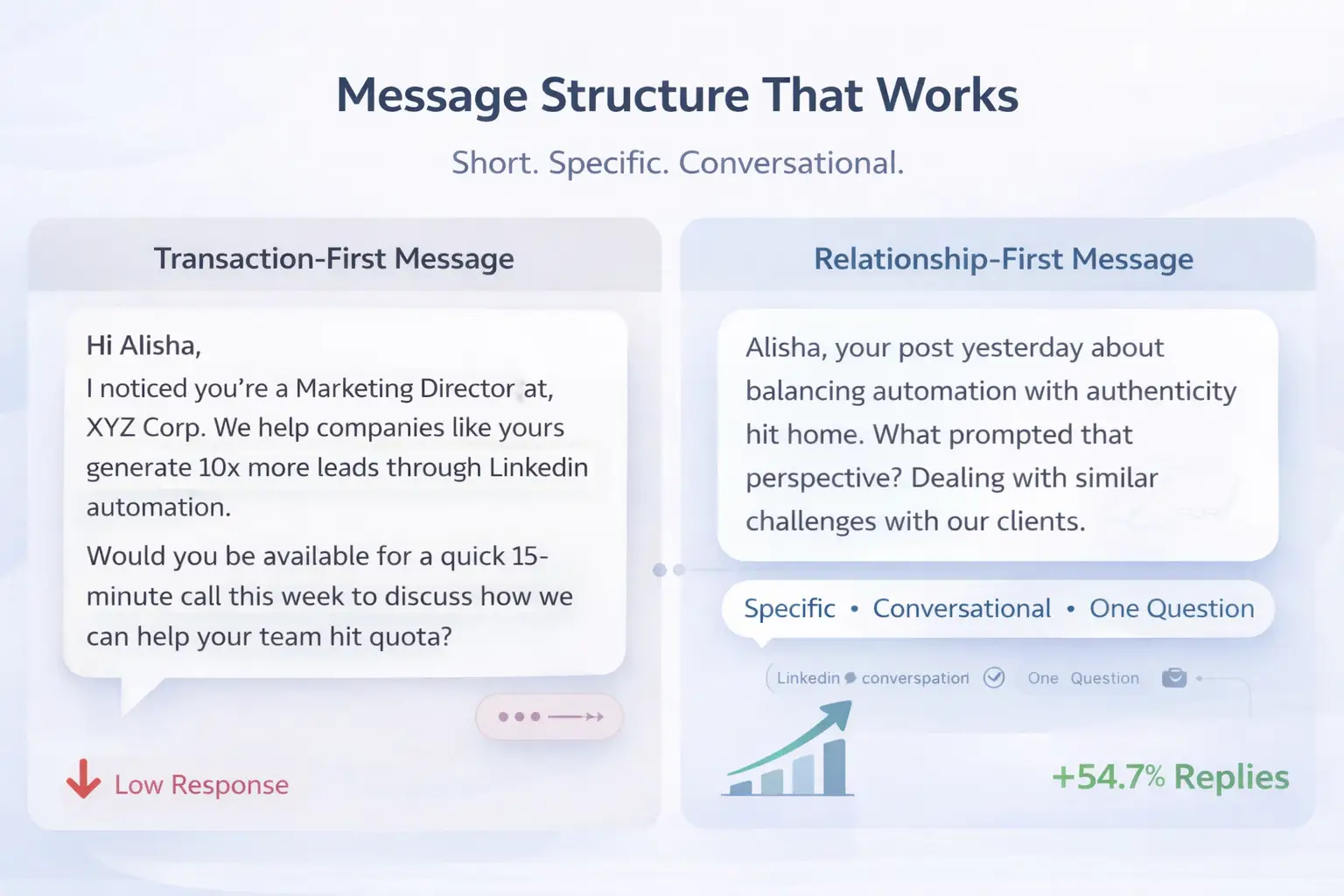
Before and After Examples
Before (Transaction-first):
"Hi Alisha, I noticed you're a Marketing Director at XYZ Corp. We help companies like yours generate 10x more leads through LinkedIn automation.
Would you be available for a quick 15-minute call this week to discuss how we can help your team hit quota?"
After (Relationship-first):
"Alisha, your point about balancing automation with authenticity in yesterday's post hit home. What prompted that perspective? Dealing with similar challenges with our clients."
The second version:
- Shows you actually read her content
- Asks about her thinking
- Shares common ground
- Takes zero time commitment
Reply rate difference? The relationship-first approach generates 54.7% more replies.
Use these proven LinkedIn message templates as starting points for your campaigns.
Scaling Without Losing Authenticity
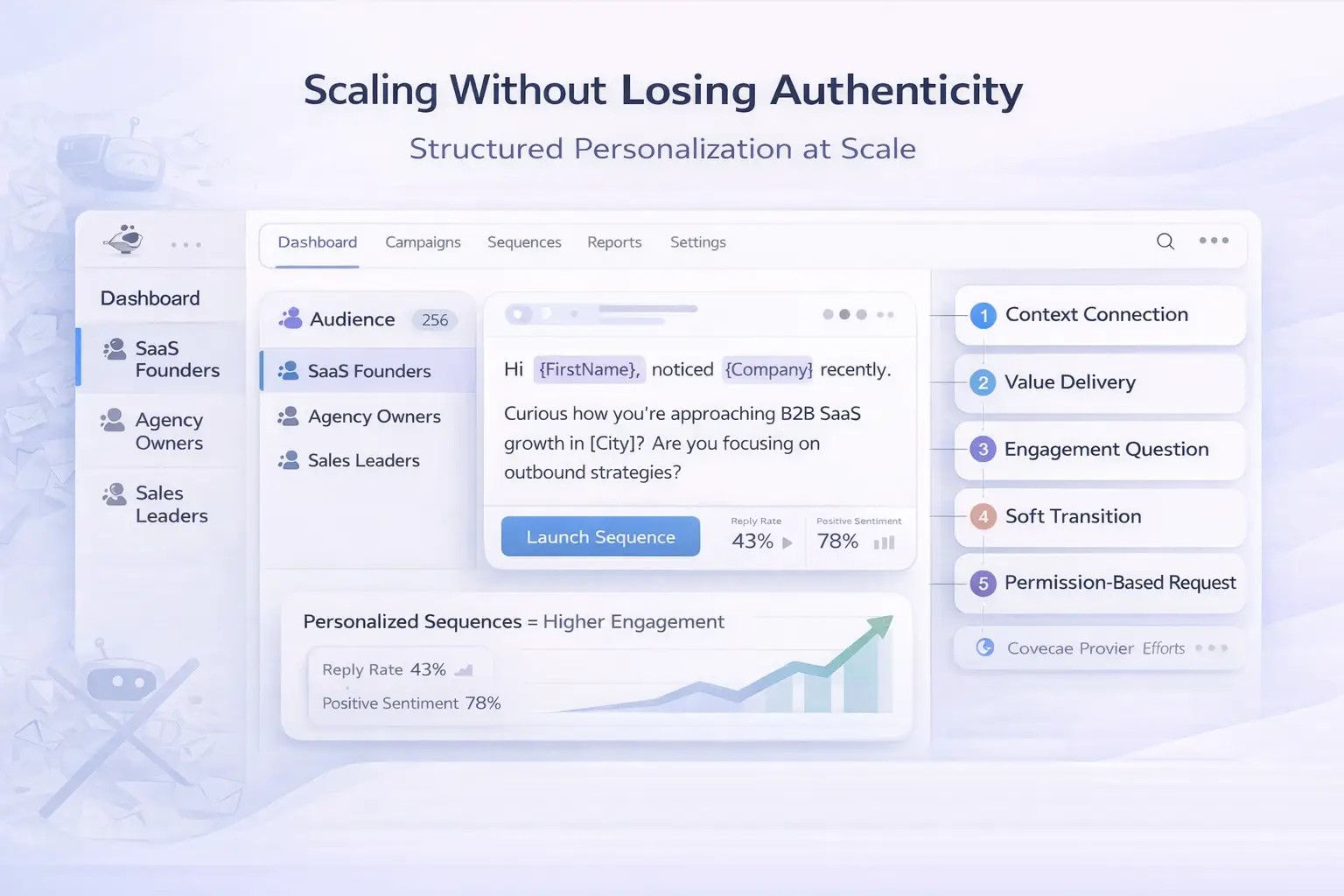
You can't manually personalize 100 messages daily. That's where smart systems enter.
The Structured Personalization Approach
Automation should enhance relationships, not replace them.
How to scale authentically:
- Use dynamic fields strategicallyInsert {{FirstName}}, {{Company}}, and {{JobTitle}} where they feel natural, not forced. Never use first name twice in one message.
Segment your audience preciselyCreate separate campaigns for different industries, roles, or pain points. One message for SaaS founders. Another for agency owners. Different challenges require different messaging.
Master LinkedIn outreach automation for sales teams to scale this approach effectively.
- Build conversation sequencesDesign 3-5 step sequences that build value over time:
- Step 1: Connection with specific context
- Step 2: Value delivery (insight, resource, framework)
- Step 3: Engagement question
- Step 4: Soft transition to conversation
- Step 5: Permission-based meeting request
Discover how to automate LinkedIn messages safely while following these principles.
Set daily limits
Send 20-30 connection requests daily maximum. LinkedIn flags aggressive automation. Slow and steady wins.
Follow this complete guide to automating LinkedIn connections with proper daily limits.
Tools That Maintain Human Touch
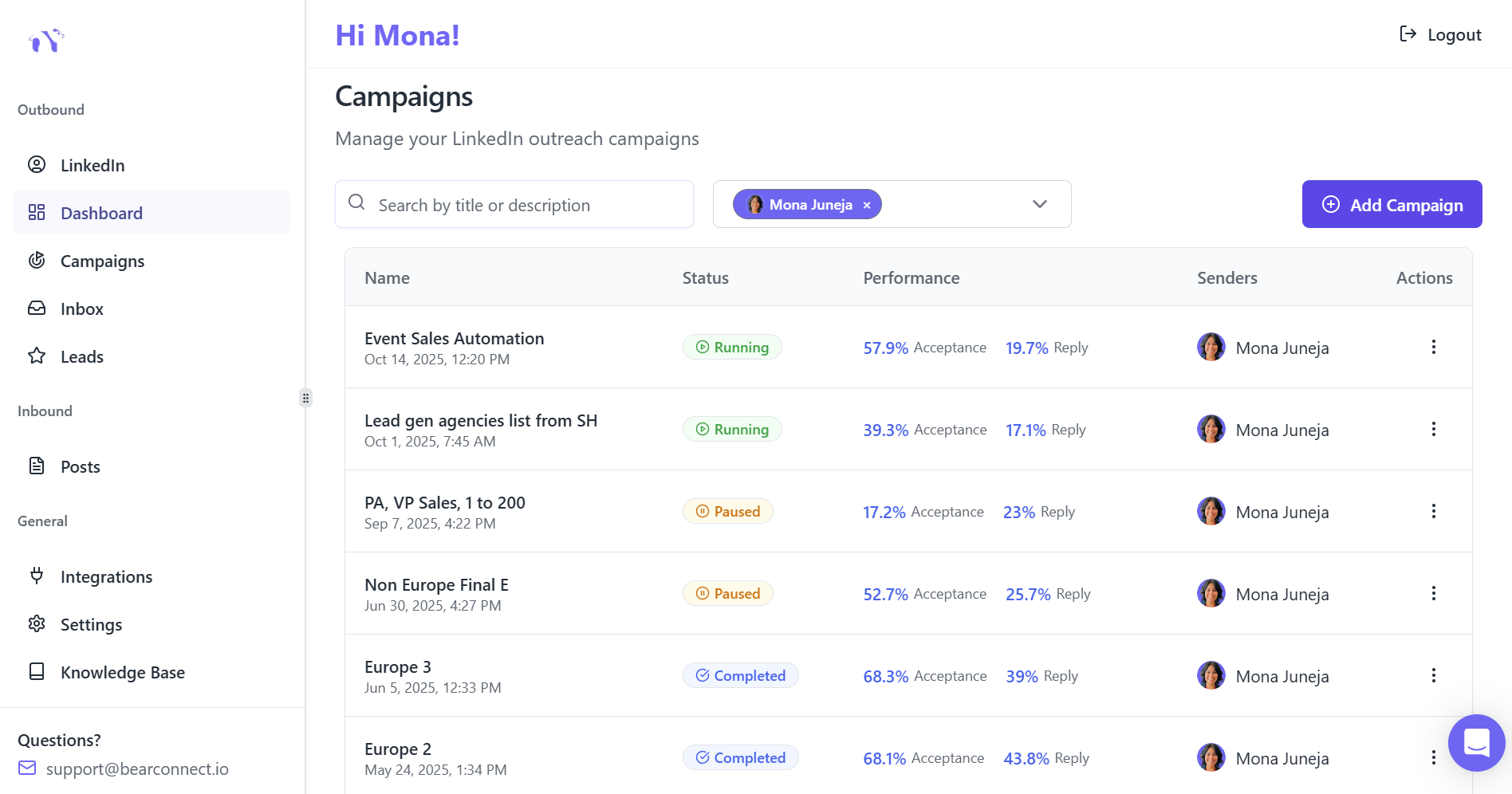
Platforms like Bearconnect help you scale relationship-first outreach without sacrificing authenticity.
Key features for authentic automation:
- Unified inbox to manage all LinkedIn conversations in one place
- Drip sequence builder for multi-step relationship nurturing
- Advanced targeting to reach precisely the right audience
- Local IP behavior mimicry to avoid LinkedIn detection
- Analytics to track which messages build relationships versus which get ignored
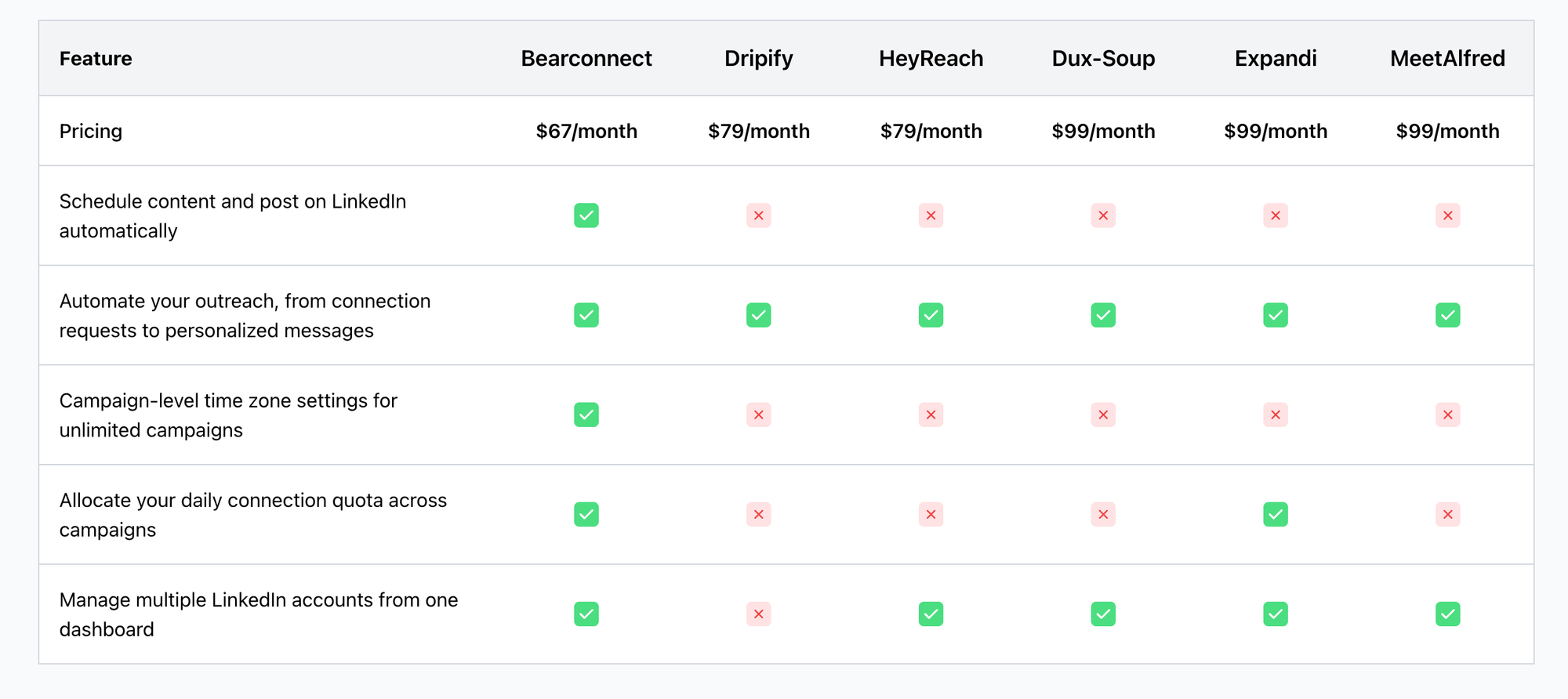
At $67 per month per LinkedIn account ($57 when connecting 5+ accounts), you can automate the repetitive parts while keeping conversations genuine.
Pro tip: Always move engaged prospects out of automation quickly. When someone replies, respond personally. Automation starts conversations. Humans build relationships.
Common Mistakes That Kill Your Credibility
Mistake 1: Pitching Too Early
Never sell in your connection request or first message. Build rapport first, demonstrate value second, discuss business third.
Mistake 2: Fake Personalization
Generic compliments feel hollow. "I loved your recent post" when you clearly didn't read it destroys trust.
Mistake 3: Ignoring Responses
Automation without follow-through wastes every connection. Check your inbox daily and respond personally to replies.
Mistake 4: Following Up Without New Value
"Just checking in" messages annoy prospects. Each follow-up must introduce new value, insight, or perspective.
Measuring What Matters
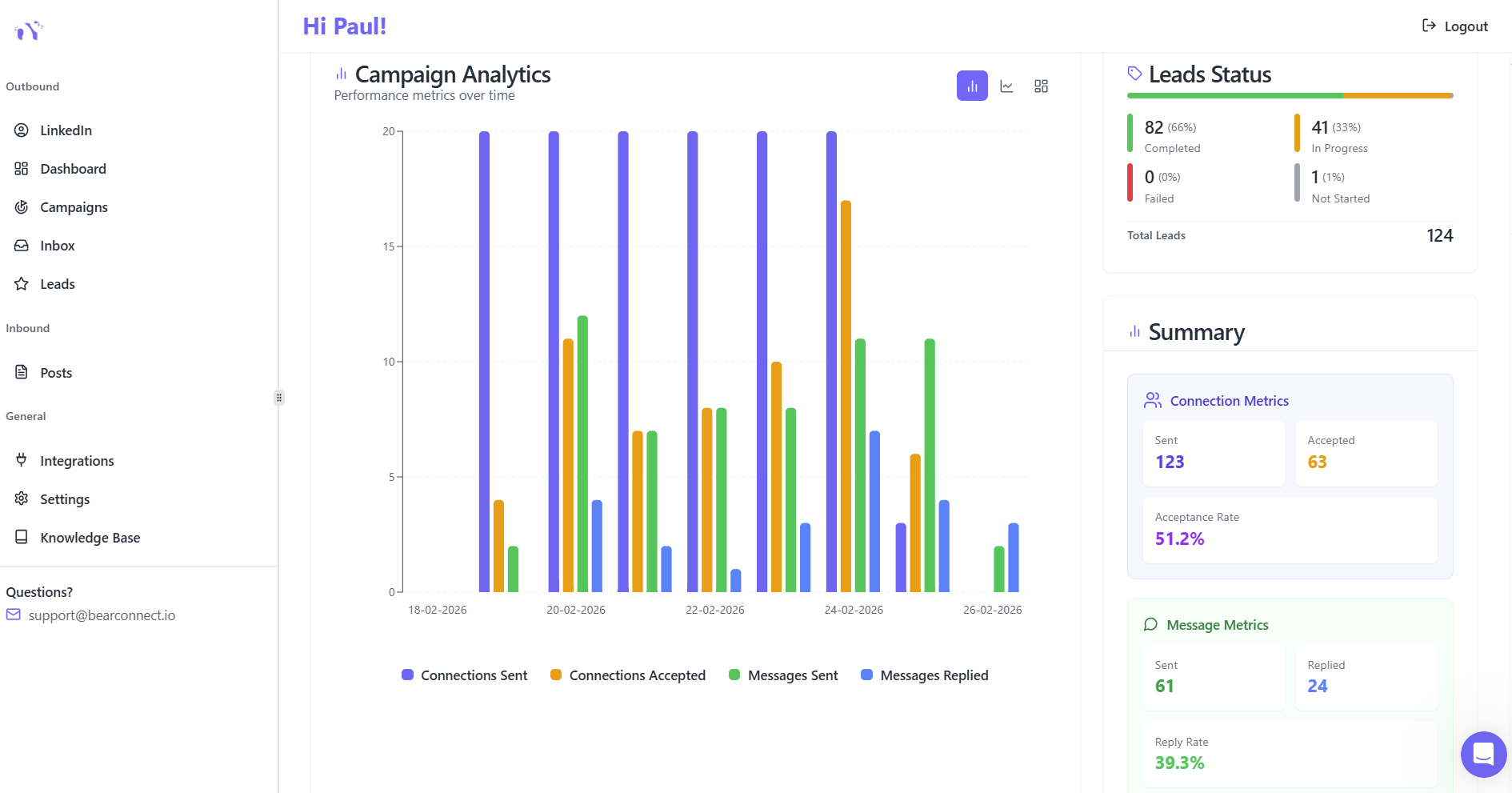
Track metrics that reveal relationship quality, not just volume.
Healthy benchmarks for 2026:
- 25-30% connection acceptance for targeted campaigns
- 20-30% first-message reply rates with optimized sequences
- 15-25% response rate minimum indicates strong messaging
- Longer replies (3+ sentences) signal higher engagement
If your acceptance rate sits below 20%, your targeting or messaging needs work. If reply rates fall under 10%, you're still sounding too salesy.
Track these metrics using advanced LinkedIn analytics features to optimize your approach continuously.
Taking Action Today
Start implementing the relationship-first method immediately.
Week 1 action steps:
- Audit your current messages: Review your last 10 LinkedIn messages. Count how many mentioned your service before providing value. Rewrite them using the curiosity-first framework.
- Build three audience segments: Separate your prospects by industry, role, or specific pain point. Create distinct messaging for each group.
- Set conservative daily limits: Start with 20 connection requests daily. Warm up your account gradually.
- Track engagement quality: Monitor reply rates and response length. Longer, thoughtful replies indicate you're building real relationships.
Create a value-first sequence. Design a 3-step outreach sequence focused entirely on relationship building. No pitch until step 4.
Reference proven LinkedIn message templates to build your sequences faster.
The relationship-first method requires patience. But the conversations it creates convert better, last longer, and build your reputation instead of damaging it.
personalization, helping you manage unlimited campaigns, track every conversation, and maintain the human touch that converts.
Start your 7-day free trial at bearconnect.io.
Frequently Asked Questions
1. How many LinkedIn messages should I send before following up?
Send 2-3 follow-up messages maximum, spaced 3-5 business days apart. Each message must add new value, never "just checking in." If no response after three touches, move on. Persistence without value becomes spam.
2. Is it better to send a blank connection request or personalized note?
Personalized connection requests achieve 35-55% acceptance rates versus 18-25% for blank requests. Keep notes under 200 characters and reference something specific about their profile or recent activity.
3. How long should my LinkedIn messages be?
Keep messages under 150 characters for best results. Short messages get 22% more replies than long ones. Make your point quickly, ask one clear question, and respect their time. Nobody reads novels on LinkedIn.
4. Can I use automation without damaging my personal brand?
Yes, when used correctly. Focus automation on repetitive tasks (connection requests, follow-up timing) while keeping message content valuable and responses personal. Set conservative daily limits (20-30 requests), segment your audience precisely, and always respond personally to replies.
5. What's the fastest way to improve my LinkedIn reply rates?
Reference recent activity or achievements in your messages. Context-based outreach (mentioning their post, promotion, or company news) boosts response rates by 32%. Combine this with messages under 150 characters and curiosity-driven questions for maximum impact.
Ready to Transform Your LinkedIn Strategy?
Join thousands of professionals already using Bearconnect to automate their outreach and grow their network.
7-day free trial • Cancel anytime
Related Articles
The Future of LinkedIn Outreach: Trends & Predictions for 2026-2027
Discover how LinkedIn outreach will evolve in 2026–2027 with AI-driven personalization, compliance-first automation, and smarter B2B prospecting strategies.
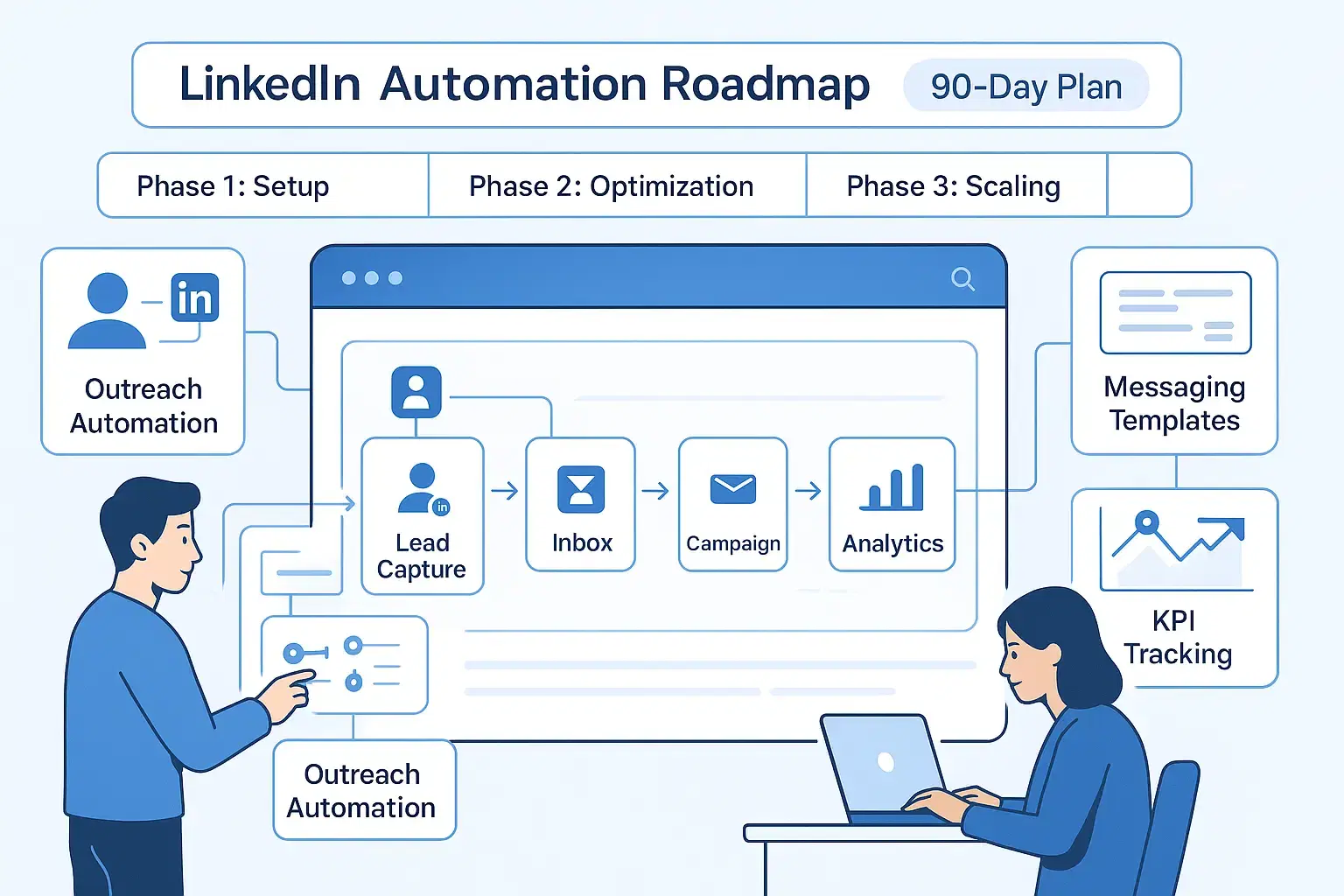
The LinkedIn Automation Roadmap: Building a 90-Day Scaling Plan (with templates)
A 90-day LinkedIn automation roadmap that turns random outreach into a predictable lead generation system. Learn how to scale safely, send smarter campaigns, and use proven templates to book more qualified sales calls consistently.
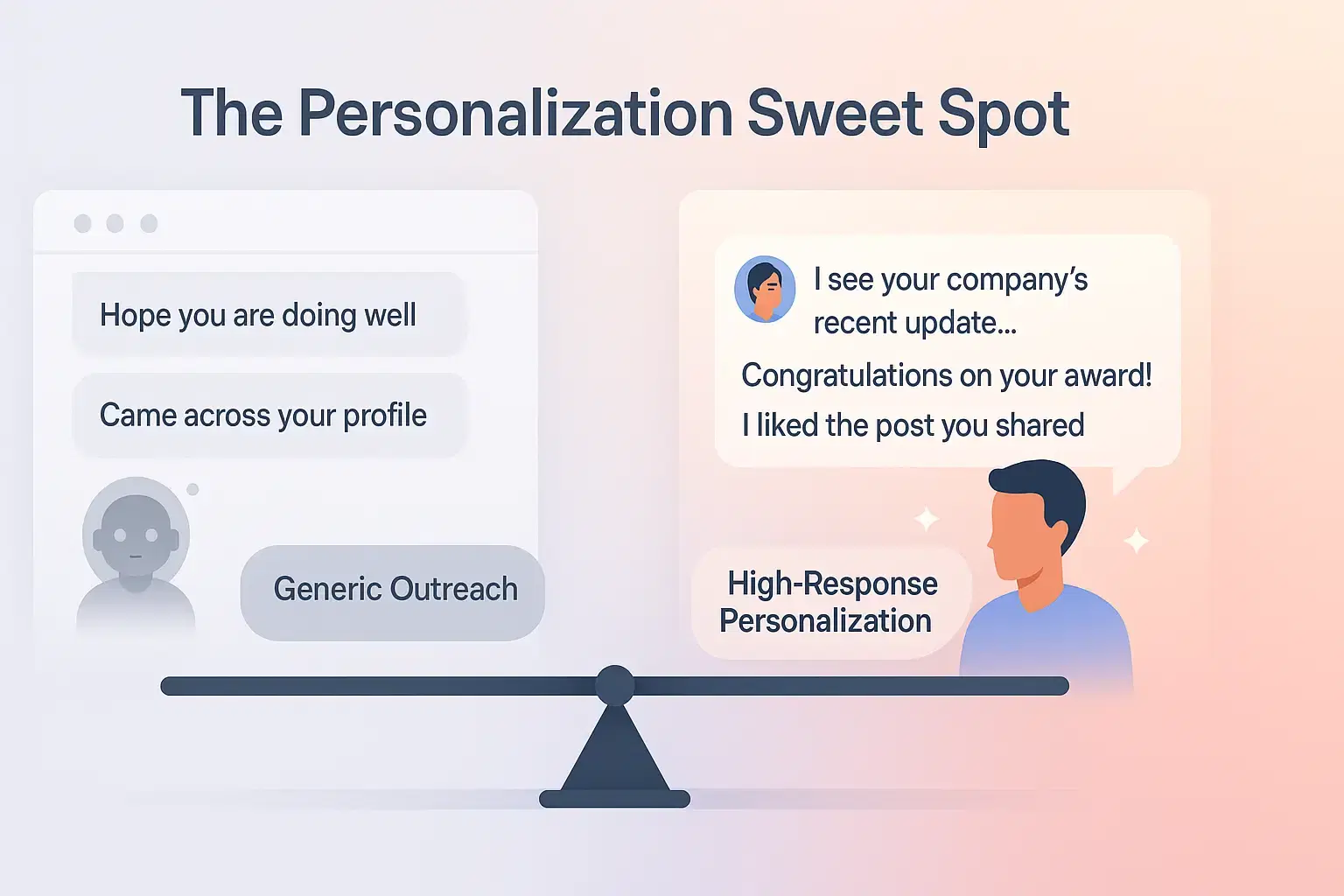
How to write personalized LinkedIn outreach messages that get responses
Learn how to craft personalized LinkedIn outreach messages that boost acceptance rates, avoid generic templates, and drive real conversations.