How to Book Meetings from LinkedIn DMs: A Simple 7-Step Sequence That Actually Works
Most LinkedIn DMs never become meetings because there is no system behind them, just random messages with no follow-up structure.
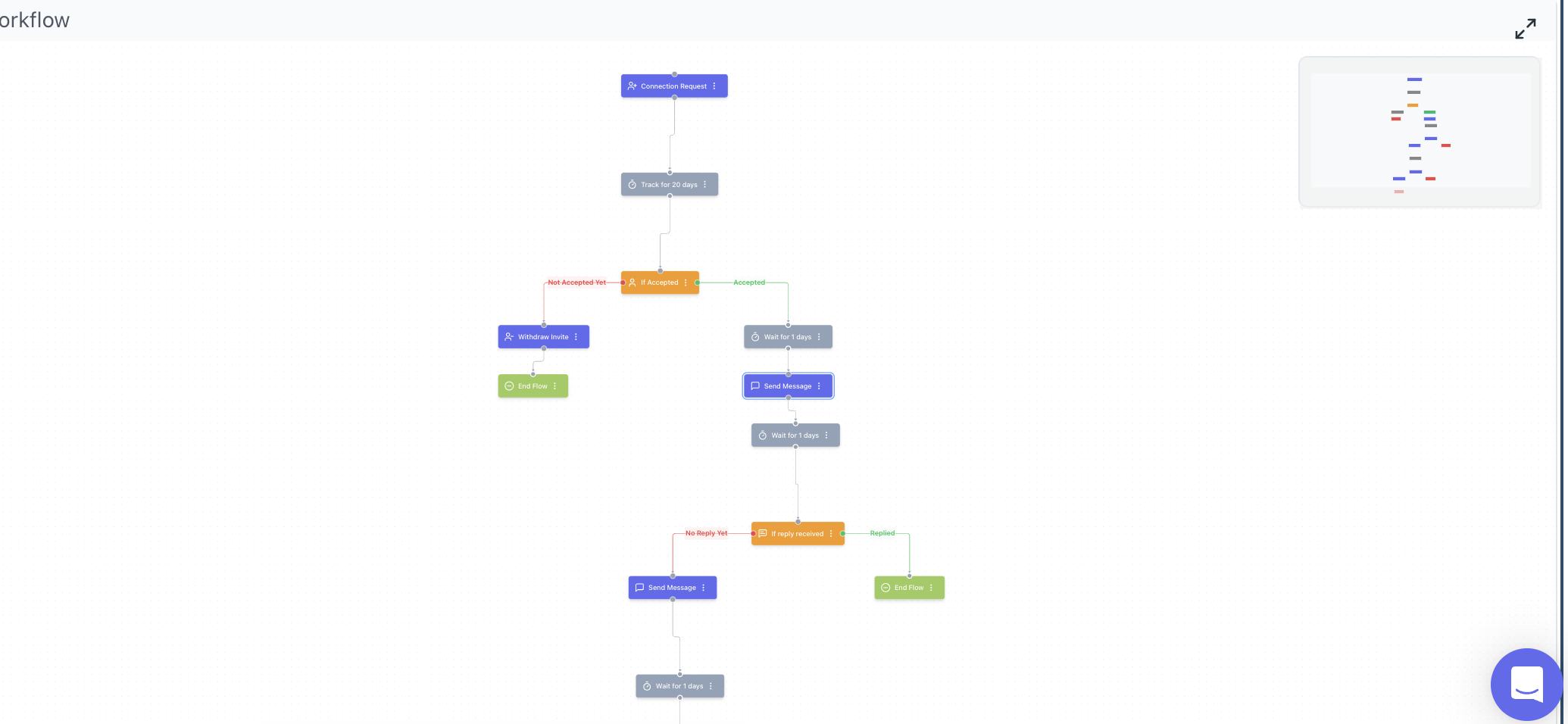
A 7-step sequence fixes this by giving every prospect a defined path from connection to confirmed call. Practitioners using drip tools like Bearconnect run this sequence automatically, but you can start it manually today.
TL;DR
- Most LinkedIn DMs fail because there is no system, not because LinkedIn does not work.
- A 7-step sequence covers: connection, warm opener, value drop, soft probe, insight share, direct ask, and follow-up.
- Each step has one job. Do not rush to the call ask.
- Response rates improve significantly when messages feel conversational, not scripted.
- You can automate the entire sequence using a drip builder like Bearconnect and manage all replies from one inbox.
Why Your LinkedIn DMs Go Cold (And It Is Not Bad Luck)
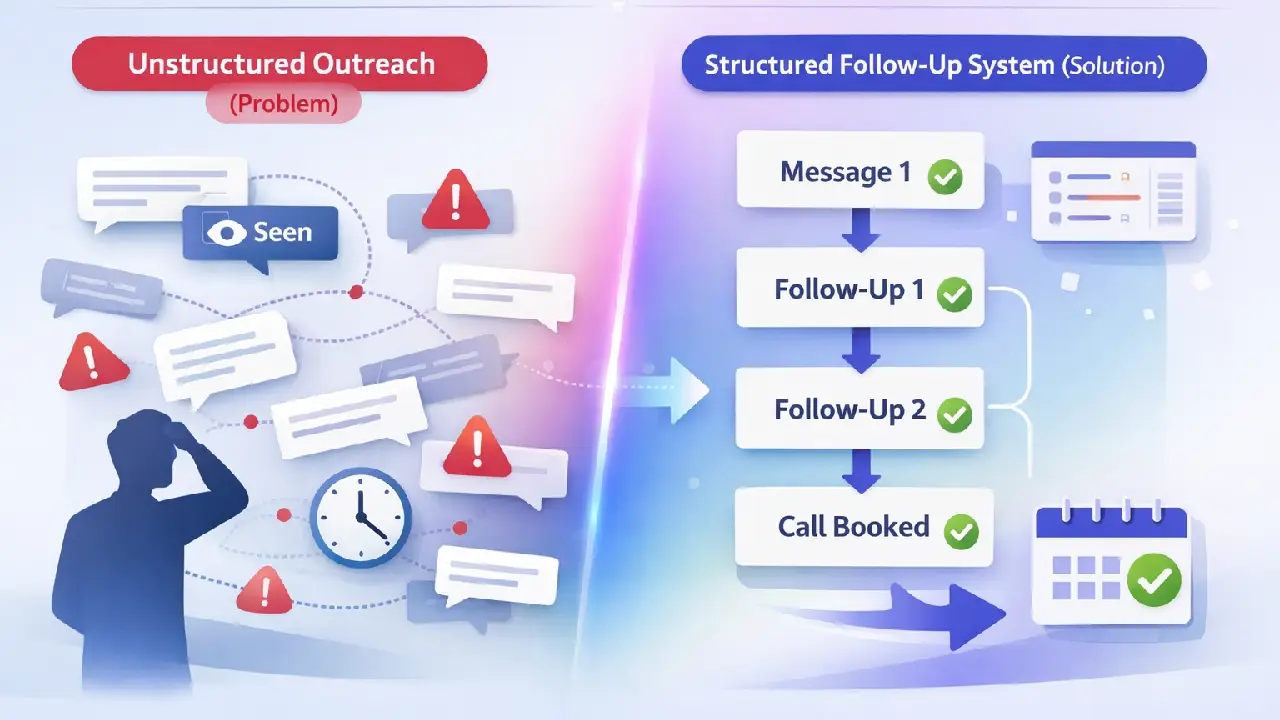
Most DM conversations die because you have no follow-up system in place.
- You send a connection request, someone accepts, you send a message, they read it, and then silence.
- You forget to follow up. The prospect moves on. Two weeks later you repeat the same cycle with someone else.
The core problem is not your message quality. It is the absence of a repeatable sequence that keeps the conversation moving without you having to remember every thread manually.
If you want to understand why cold outreach vs warm prospecting produces such different results, the answer almost always comes down to structure.
A structured DM-to-call sequence fixes that.
You can plug in our LinkedIn automation message templates to speed up writing each step of this sequence.
The 7-Step LinkedIn DM Sequence to Book Meetings
This sequence is built for B2B sales professionals, agency owners, and founders who already understand LinkedIn but need a repeatable system to convert connections into calls.
Step 1: Send a Connection Request With a Personalized Note
Your first impression happens before the DM, not during it.
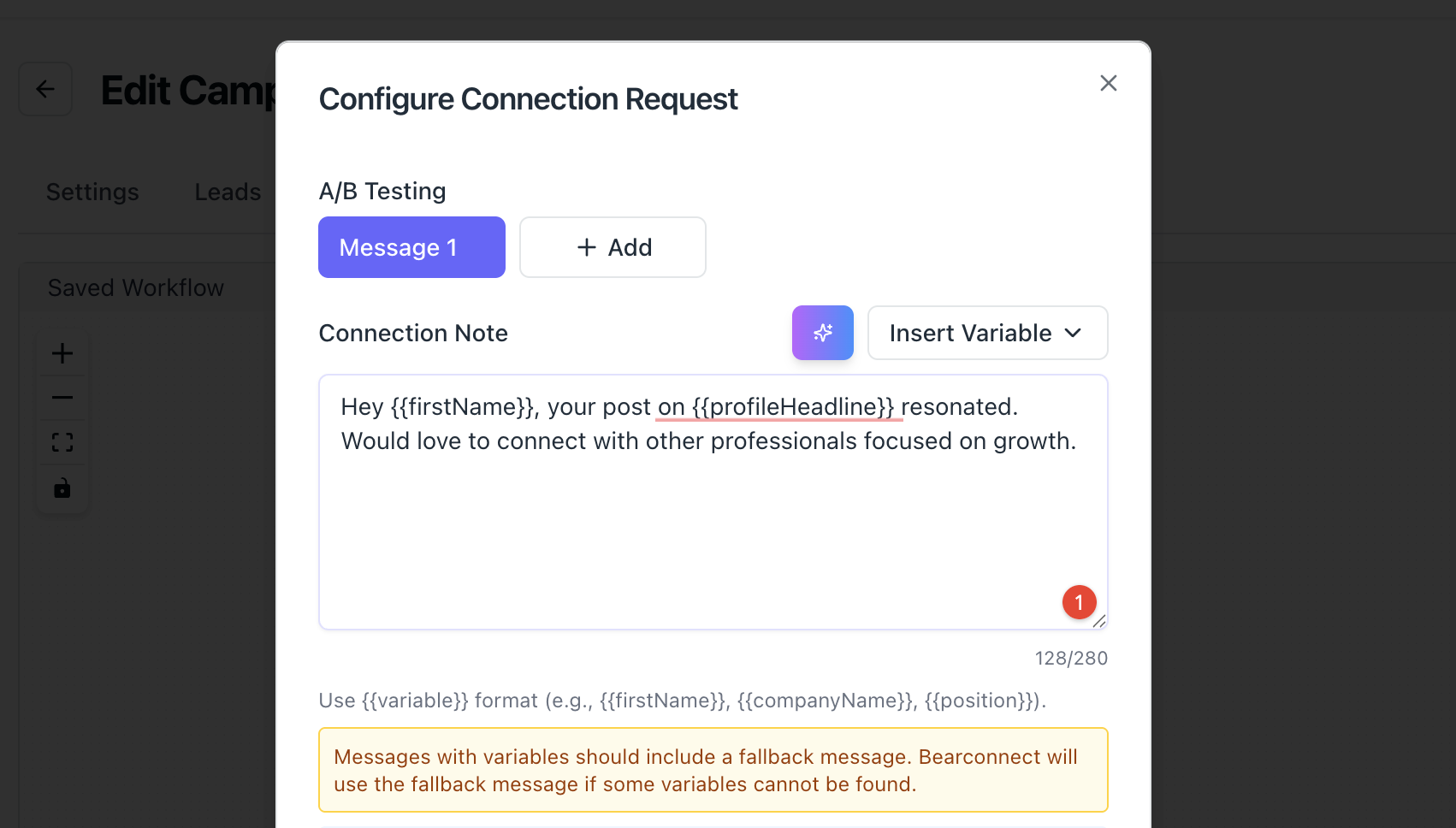
A connection request with a short, relevant note gets accepted more often than a blank request.
Keep it under 300 characters. Reference something specific: their content, their role, or a shared context like a mutual connection or event.
Example:
"Hey [Name], saw your post on [topic] and it resonated. Would love to connect with other [role] focused on [outcome]."
Pro Tip: Do not pitch in the connection note. Your only goal here is acceptance.
Step 2: Send a Warm Opener Within 24 Hours of Acceptance
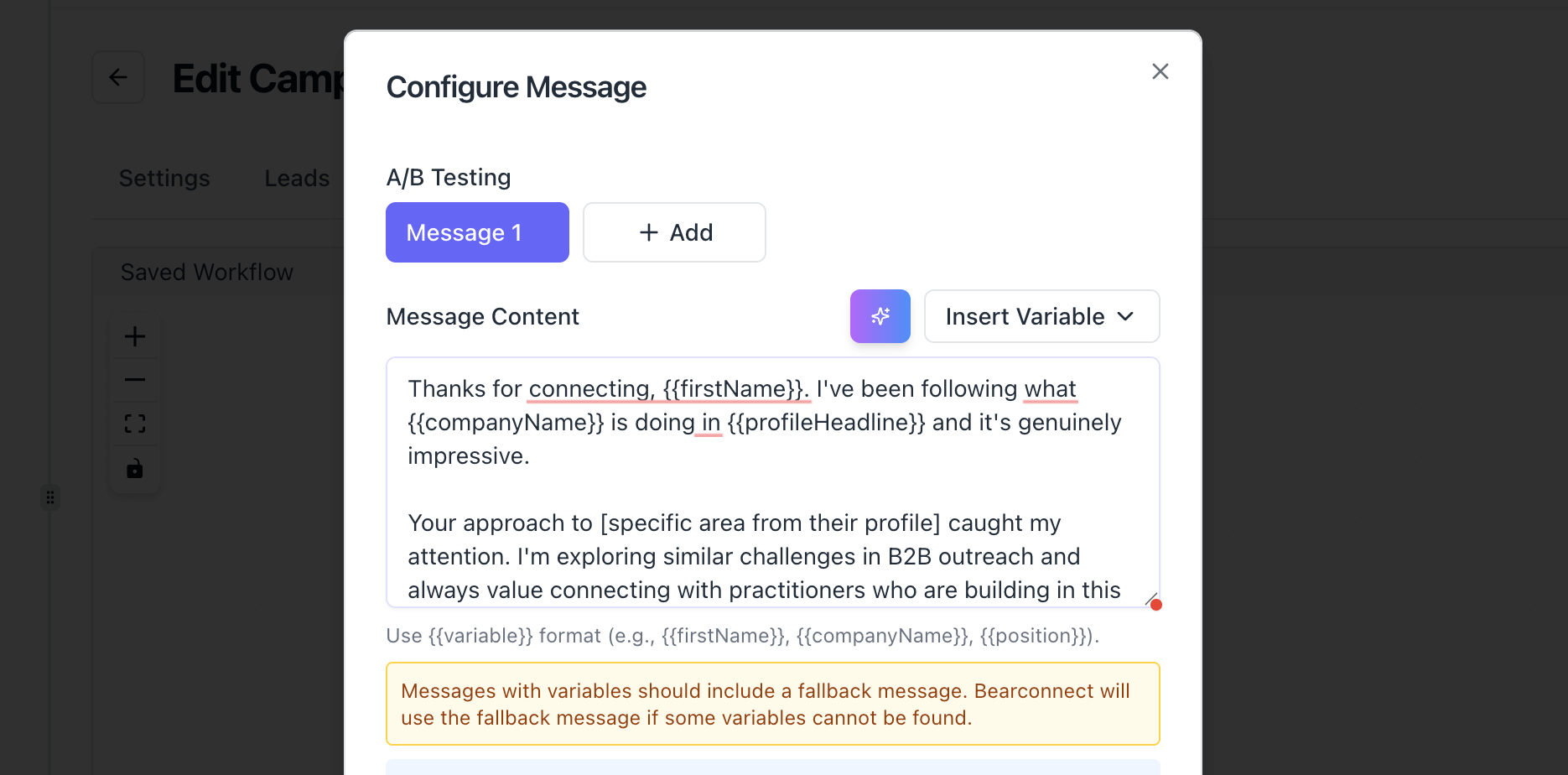
The first DM sets the tone for the entire conversation.
Send it within 24 hours of acceptance while you are still fresh in their mind. Keep it short, human, and focused on them, not your offer.
Example:
"Thanks for connecting, [Name]. I noticed you are working on [area]. Have been following what [their company] is doing and it is genuinely impressive. Hope the connection is useful both ways."
This message has one job: start a real conversation.
Step 3: Drop a Piece of Genuine Value
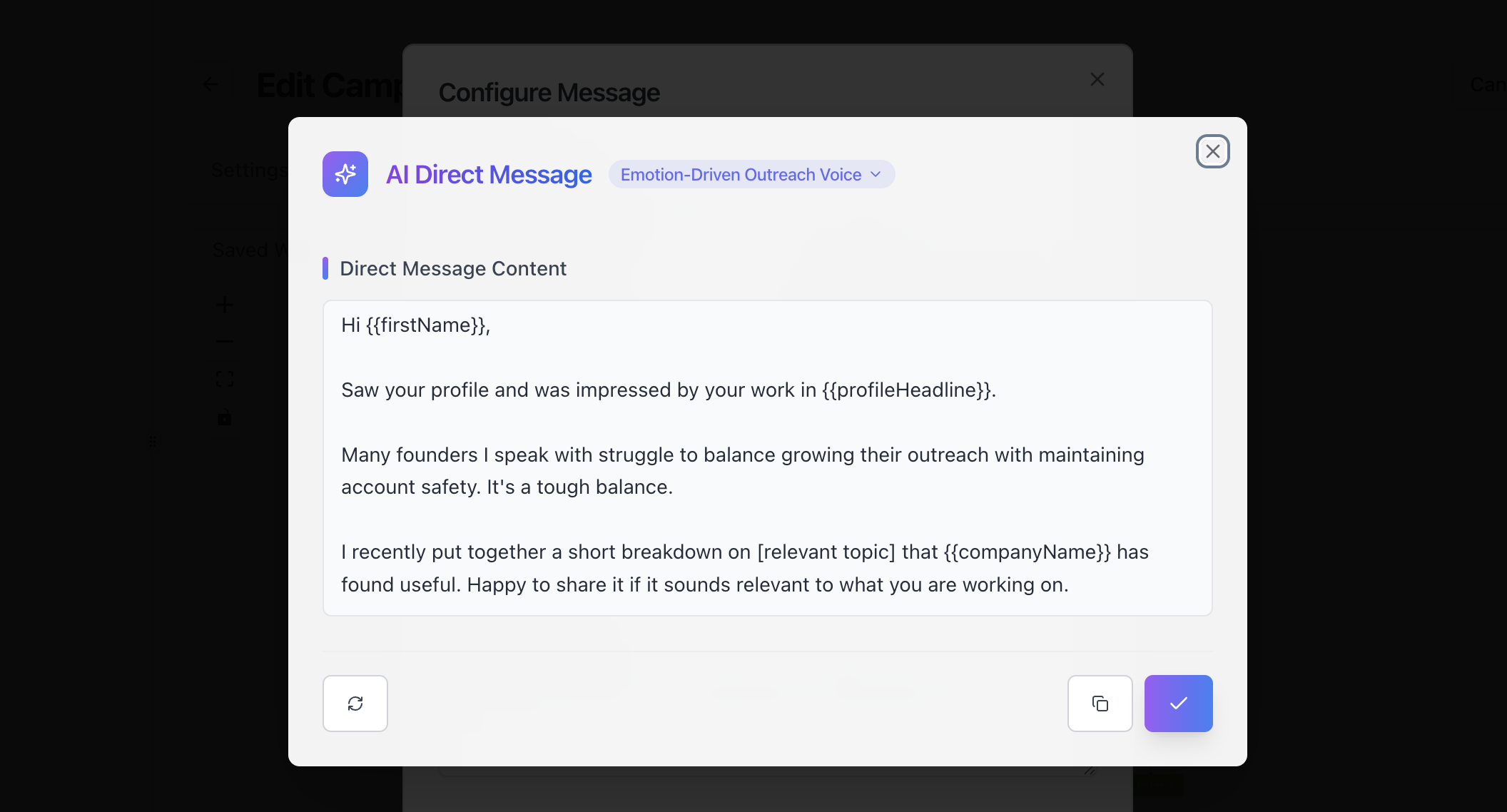
Give before you ask. This is not a tactic; it is how trust works.
On Day 3 or 4, send something useful. A relevant resource, a short insight from your work, or a quick observation tied to their industry. It does not need to be long.
If you need help writing personalized outreach messages that do not feel templated, start with specificity over length.
Example:
"By the way, I recently put together a short breakdown on [relevant topic] that [their type of business] has found useful. Happy to share it if it sounds relevant to what you are working on."
Pro Tip: A free resource works better as an offer than a direct attachment. Let them ask for it. That reply is a micro-commitment that warms the conversation.
Step 4: Ask a Soft Probing Question
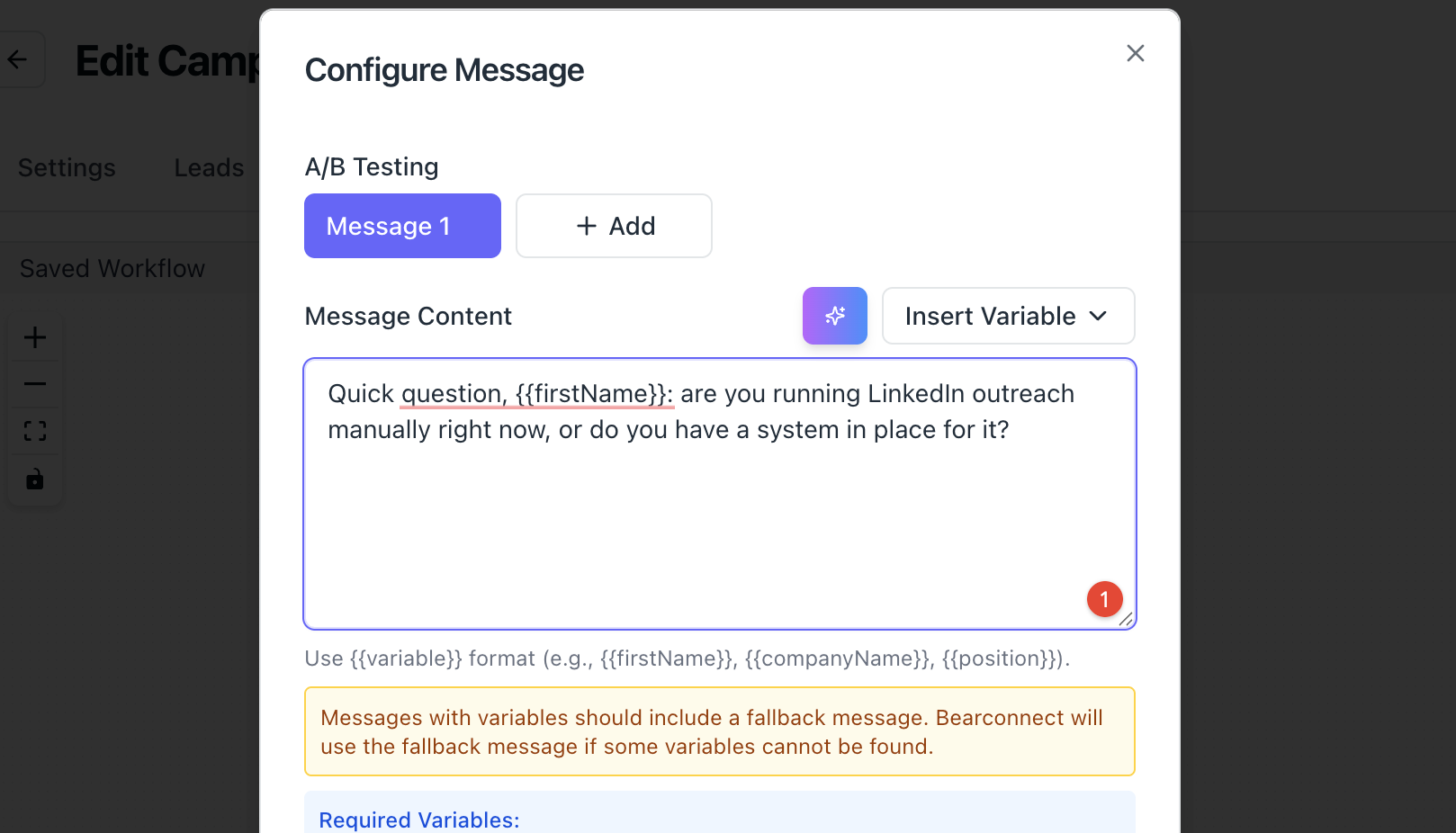
The goal of Step 4 is to get them talking about their problem.
On Day 5 or 6, send a one-line question that is directly relevant to a pain point your offer solves. The key is making it feel like genuine curiosity.
This is where most people either come across as salesy or they nail the trust-building moment.
Example:
"Quick question, [Name]: are you running LinkedIn outreach manually right now, or do you have a system in place for it?"
This single question does two things. It qualifies the prospect and opens the door to a meaningful conversation.
If prospects go quiet after step 4, add a call step to your LinkedIn sequence and reference the DM you already sent.
Step 5: Share a Relevant Insight or Mini Case Study
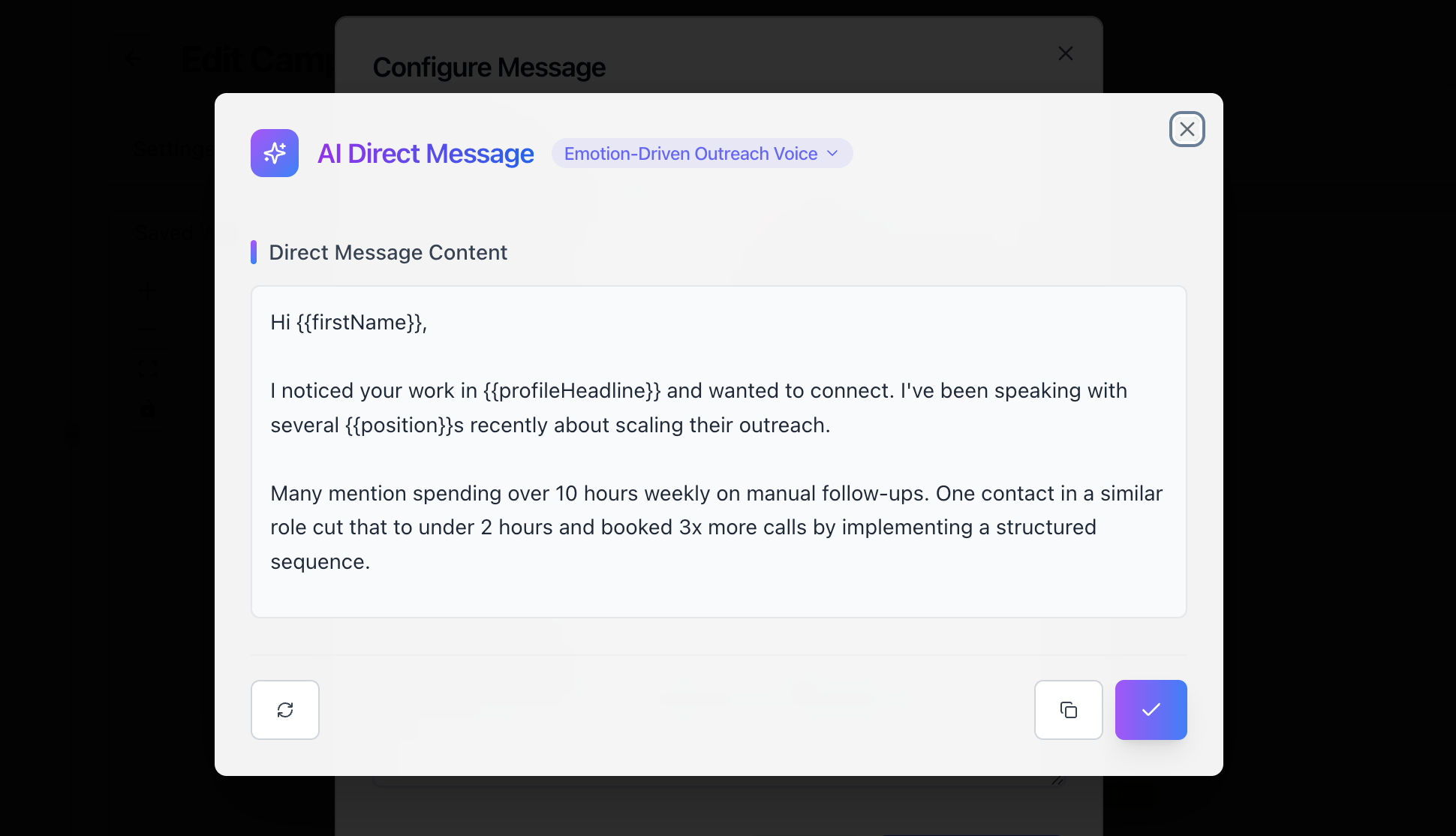
Use their answer to Step 4 to deliver a targeted insight.
If they reply, you now know their situation. Share a short example, a result a client got, or a framework that addresses their specific challenge. Keep it to 3-5 lines.
Example:
"That makes sense. We worked with a [similar role] who was spending 12 hours a week on manual follow-ups. Once they set up a structured DM sequence, they cut that to under 2 hours and booked 3x more calls in the same period. Happy to share how they did it."
This is where you build credibility without a sales pitch.
Step 6: Make a Direct, Low-Friction Call Ask
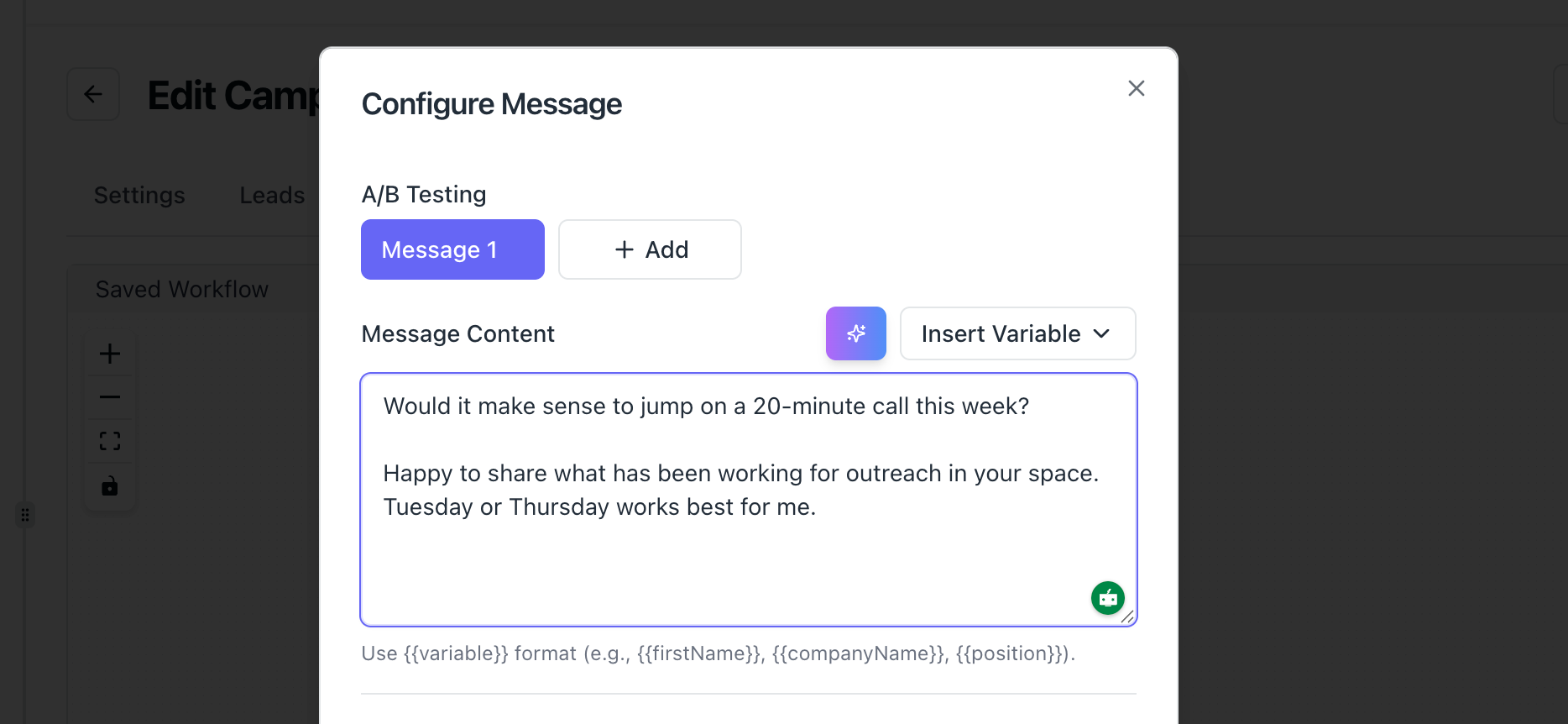
Ask for the meeting clearly. Do not hint at it.
On Day 8 or 9, make a direct but low-pressure ask. Frame it as a short conversation, not a demo or sales call. Give them a specific time or two options to reduce the friction of saying yes.
Example:
"Would it make sense to jump on a 20-minute call this week? Happy to share what has been working for outreach in your space. Tuesday or Thursday works best for me."
Pro Tip: "20 minutes" converts better than "30 minutes." It feels like a smaller commitment to a busy prospect.
Step 7: Send One Final Follow-Up If No Reply
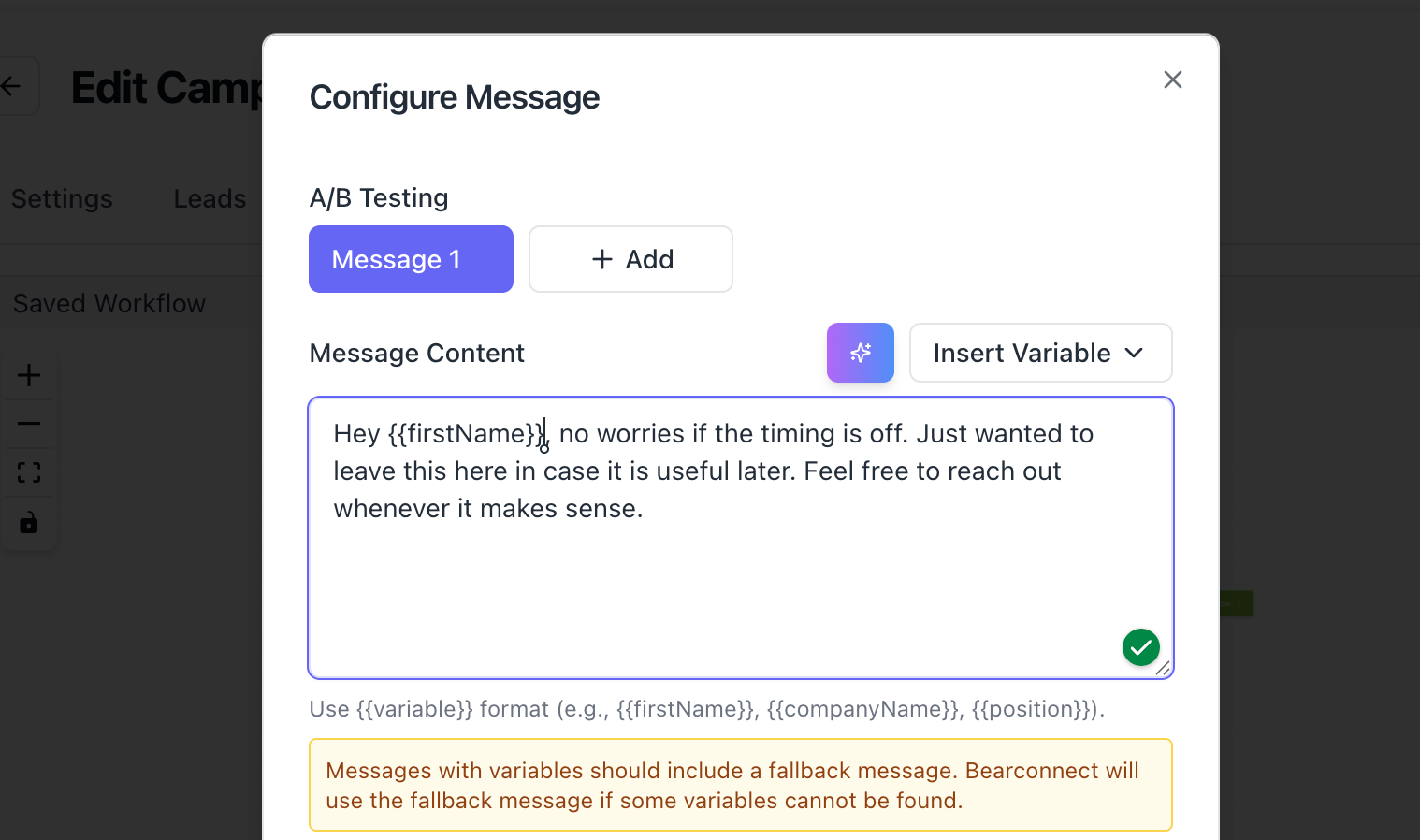
One follow-up after the call ask keeps you professional, not desperate.
If they do not reply to Step 6, wait 3 to 4 days and send a short, light follow-up. Acknowledge the silence. Keep it friendly.
Example:
"Hey [Name], no worries if the timing is off. Just wanted to leave this here in case it is useful later. Feel free to reach out whenever it makes sense."
This message does something important: it ends the sequence on a positive note without burning the relationship. Some prospects come back weeks later because of this exact message.
Timing and Spacing: The Full Sequence at a Glance
| Step | Message Type | Send On |
|---|---|---|
| 1 | Connection note | Day 0 |
| 2 | Warm opener | Day 1 |
| 3 | Value drop | Day 3-4 |
| 4 | Soft probing question | Day 5-6 |
| 5 | Insight or mini case study | Day 7 (after reply) |
| 6 | Direct call ask | Day 8-9 |
| 7 | Final follow-up | Day 12-13 |
Why Most People Skip Steps 3-5 (And Why That Kills Conversions)
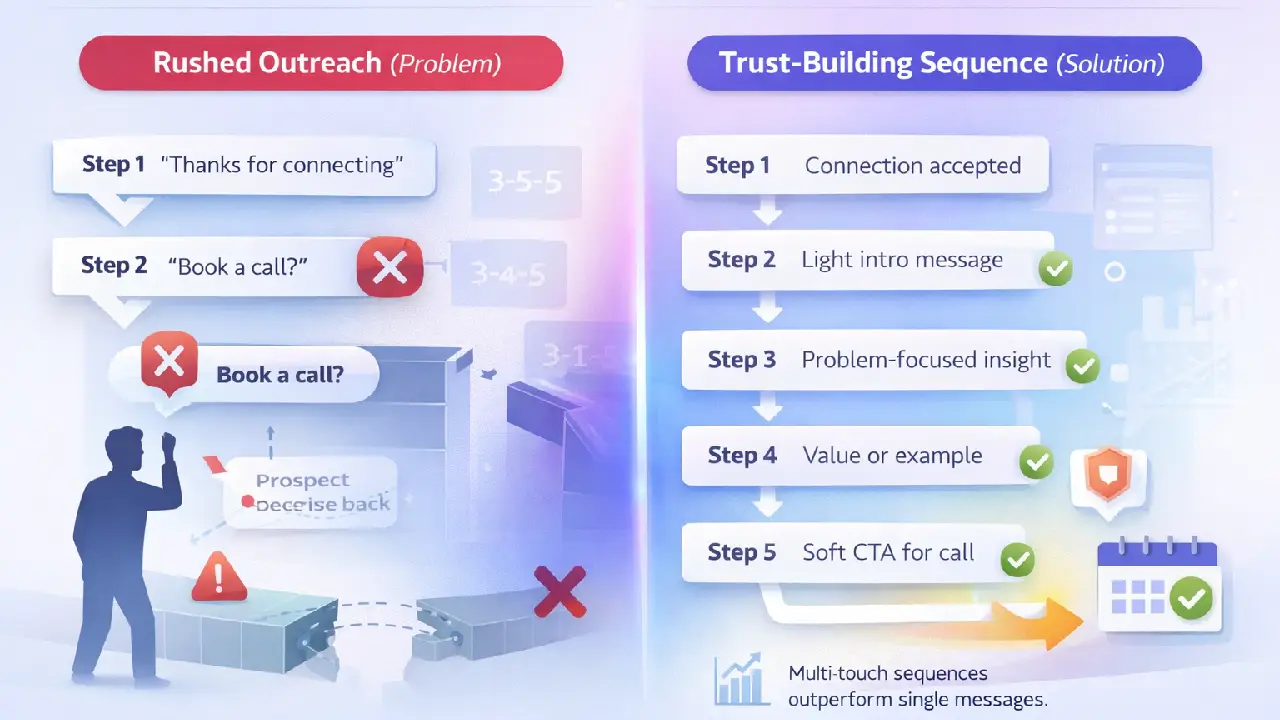
Jumping from "thanks for connecting" to "want to book a call?" is the most common DM mistake.
Prospects are not ready for a meeting after two messages. They need to see that you understand their problem, that you have something relevant to offer, and that you are worth 20 minutes of their time.
Steps 3 through 5 build that case before you ever ask.
Research from LinkedIn consistently shows that personalized, multi-touch sequences outperform single-message outreach by a wide margin.
The reason is simple: trust is built through repeated, relevant contact, not a single clever opener.
Common Mistakes That Kill Your DM-to-Call Rate
- Pitching in message one or two. You lose 80% of prospects at this point.
- Using identical messages for everyone. Generic = ignored. Use proven LinkedIn message templates as a starting point, then customize for each persona.
- Waiting too long between messages. More than 5 days of silence breaks momentum.
- Not following up at all after the call ask. Most bookings come from follow-ups, not first asks.
- Making the CTA complicated. "Let me know if you ever want to connect" is not a CTA.
How to Run This Sequence Without Spending 10 Hours a Week
Manually managing this sequence across 50 to 100 prospects is where most people burn out.
This is where automation becomes the logical next step.
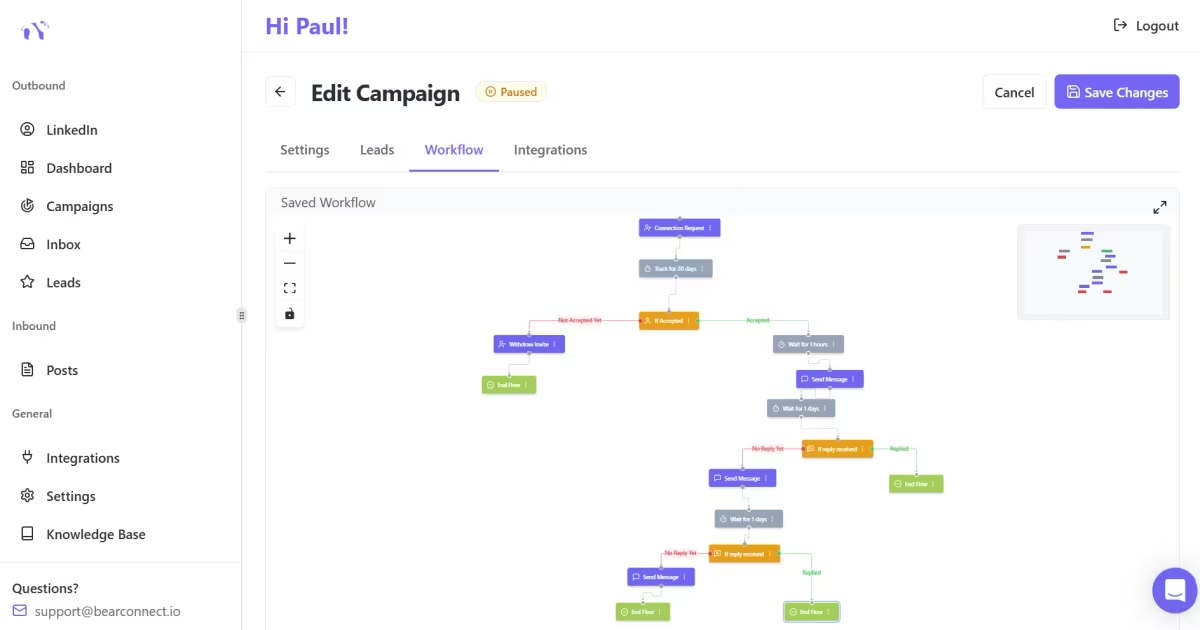
- Bearconnect's drip sequence builder lets you set up this exact 7-step flow as an automated campaign, with smart delays between each message and personalization tokens that make every message feel 1:1.
- You write the sequence once. Bearconnect runs it for every new connection, on the right day, at the right time.
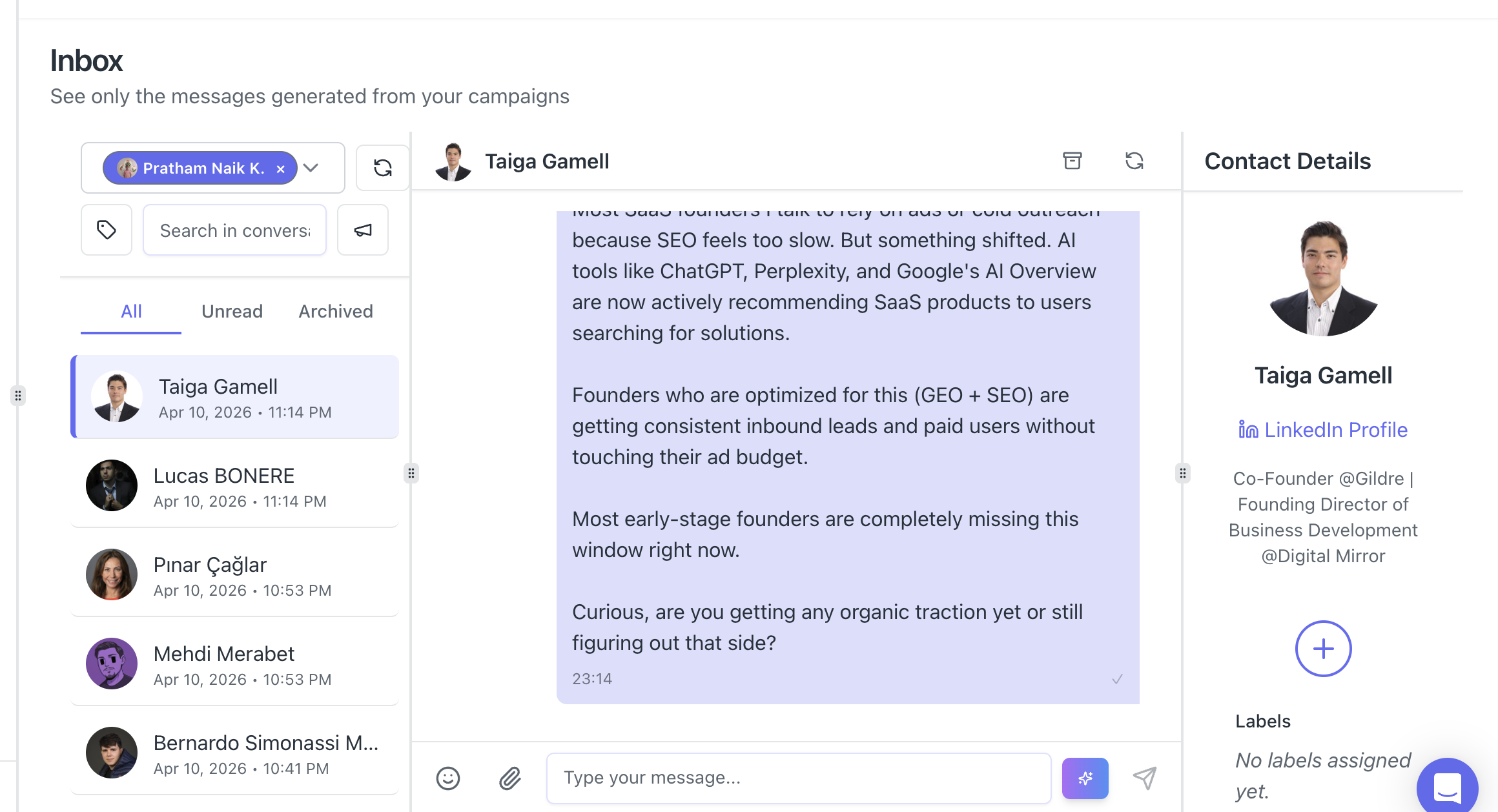
- When someone replies, Bearconnect's unified inbox pulls all conversations from every connected LinkedIn account into one place, so you never miss a hot lead buried across multiple tabs.
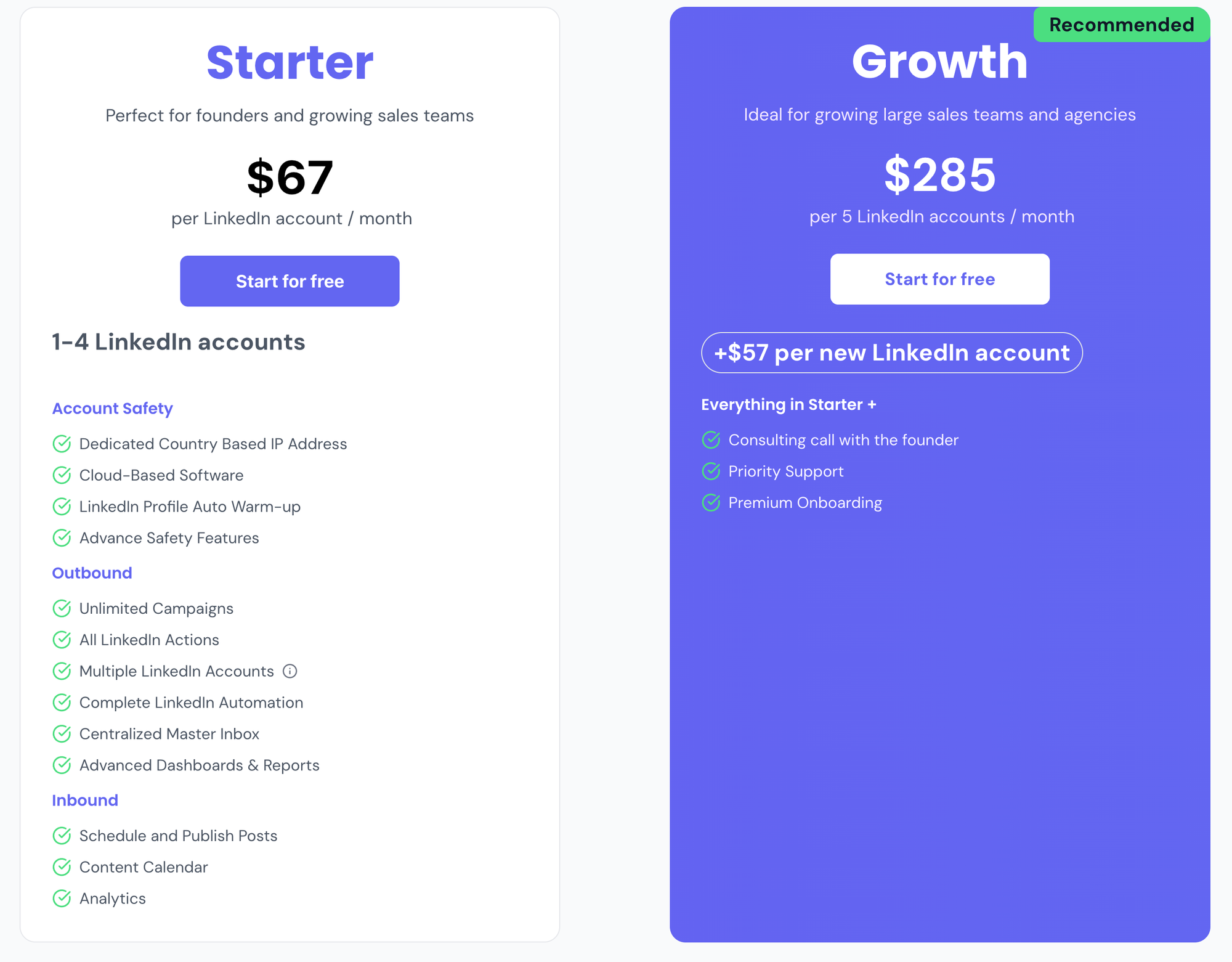
- Bearconnect is priced at $67/month per LinkedIn account, and drops to $57/month per account when you connect 5 or more accounts, making it a practical option for agencies or teams running outreach at scale.
Pro Tip: Automate Steps 1 through 4. Handle Steps 5 through 7 yourself once a prospect engages. This keeps the human touch where it matters most, at the moment of conversion.
What a Real Outreach Scenario Looks Like
A SaaS founder targeting HR directors runs this sequence to 80 new connections per week.
- Week 1: Connections sent with personalized notes referencing a relevant post or job title.
- Days 1-4: Automated warm opener and value drop goes out via Bearconnect drip campaign.
- Day 5-6: Probing question sent automatically. Founder monitors the unified inbox for replies.
- Replies get a personalized insight message written by the founder.
- 12 to 15 prospects reply. 6 to 8 book a 20-minute call per week.
The founder spends under 2 hours per week on outreach instead of 12 to 15 hours. The sequence does the heavy lifting.
5 FAQs About Booking Meetings from LinkedIn DMs
1. How many follow-up messages should I send before giving up?
Send a maximum of 3 to 4 messages after your initial opener before ending the sequence. More than that crosses into spam territory and can damage your account standing.
2. Does personalizing every DM really make a difference?
Yes. Even small personalization, like referencing their role, content, or company, can double your reply rate. One relevant detail makes the message feel like it was written for them, not copied from a template.
3. How long should each LinkedIn DM be?
Keep each message to 3 to 5 lines maximum. Shorter messages get read. Long walls of text get ignored or deferred indefinitely.
4. Is it safe to automate LinkedIn DM sequences?
Yes, if you use a tool that mimics natural human behavior and respects LinkedIn's daily action limits. Bearconnect uses local IPs and behavior mimicry to keep outreach safe and avoid triggering LinkedIn's spam detection.
5. How many connections do I need to send per week to see results?
For most B2B offers, 50 to 80 targeted connection requests per week is enough to generate a consistent pipeline of 5 to 10 qualified calls per week, depending on your acceptance and reply rates. Quality targeting matters more than raw volume.
Ready to Stop Managing This Manually?
You now have the exact sequence. The next step is deciding whether you want to run it by hand for every prospect or build it once and let it run automatically.
If you manage LinkedIn outreach for yourself or a team, check out how Bearconnect helps SDRs book more meetings and set up your first drip campaign in under 30 minutes.
The sequence above is exactly the kind of workflow Bearconnect's drip builder was designed to automate.
About the Author
Mona Juneja is the founder of Bearconnect and a B2B sales professional with 20+ years of experience at Microsoft, Oracle, and Dell.
After two decades of watching lead generation stay manual and broken for most businesses, she built Bearconnect in May 2024, an AI-powered LinkedIn automation platform that handles outreach, messaging, and content scheduling from one place.
Connect on LinkedIn: Mona Juneja
Ready to Transform Your LinkedIn Strategy?
Join thousands of professionals already using Bearconnect to automate their outreach and grow their network.
7-day free trial • Cancel anytime
Related Articles
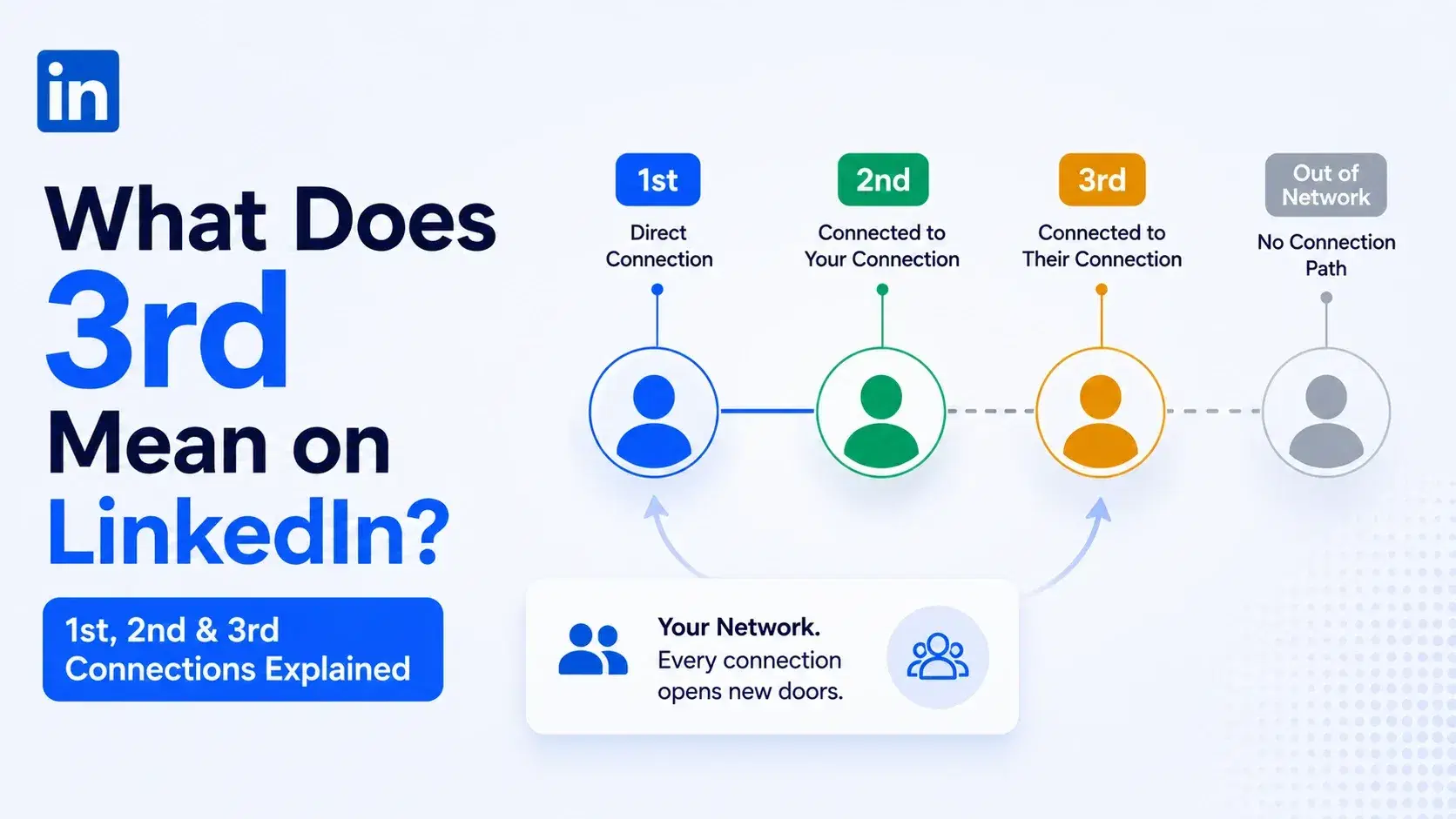
What Does 3rd Mean on LinkedIn? 1st, 2nd and 3rd Connections Explained
That gray 3rd next to a name is not a wall, it is a puzzle. Here is what 1st, 2nd, and 3rd degree connections mean, and how to reach any of them.
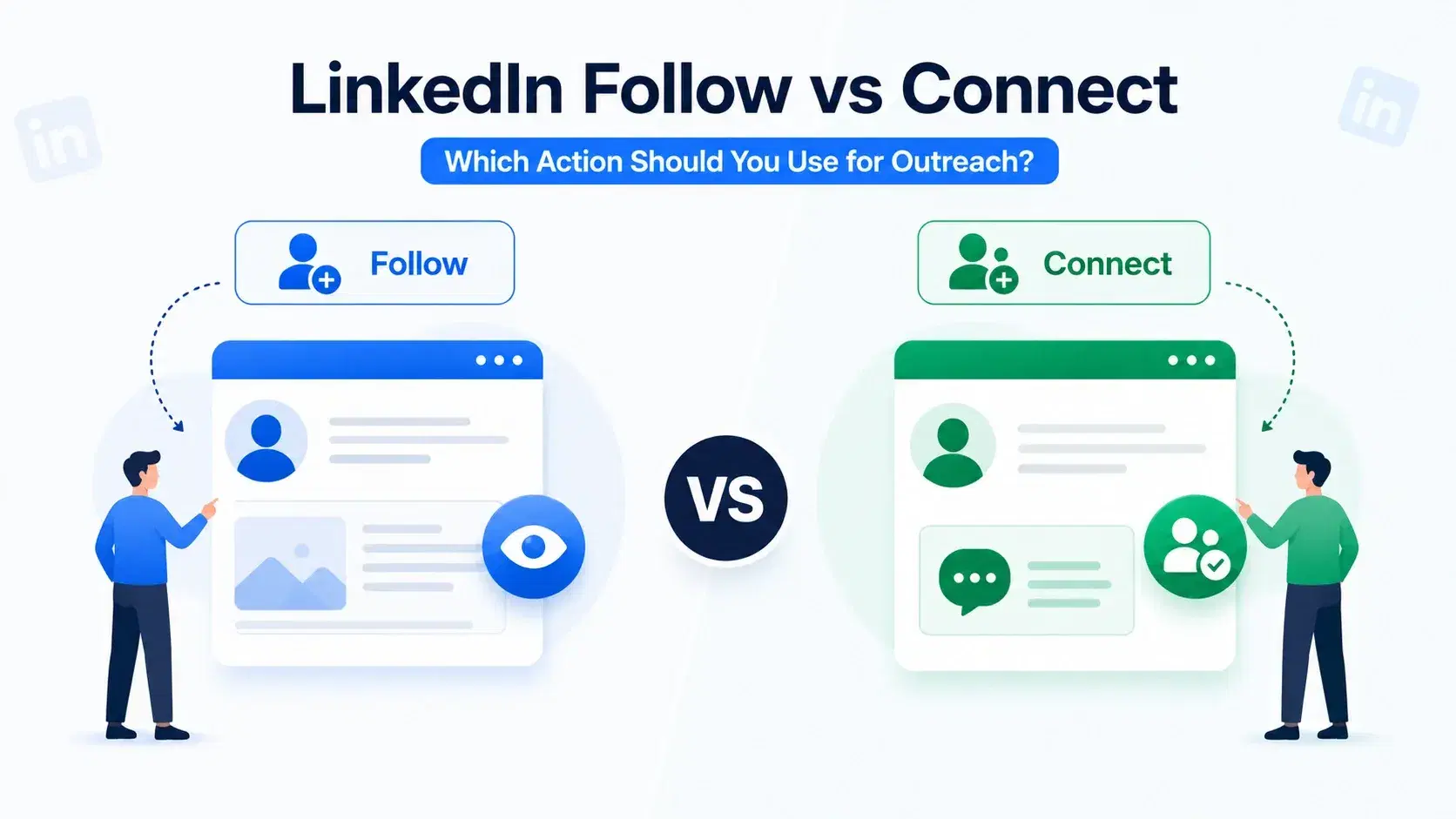
LinkedIn Follow vs Connect: Which Action Should You Use for Outreach?
Following and connecting on LinkedIn aren't the same play. Here's which one actually moves cold prospects toward a reply, and when to use both in your outreach sequence.
How to Connect HubSpot With a LinkedIn Automation Tool to Build a Multi-Touch Outbound Journey
Learn how to connect HubSpot with LinkedIn automation tools to create a scalable multi-touch outbound journey. Build consistent follow-ups, automate outreach, and turn conversations into booked meetings without manual effort.