LinkedIn recommendation templates: 30+ examples you can copy and personalize
I have stared at that blank recommendation box more times than I'd like to admit. Cursor blinking “ | “, nothing typed.
If you are here, you are either writing one right now or trying to get one. You want the actual wording, not a lecture on why recommendations matter.
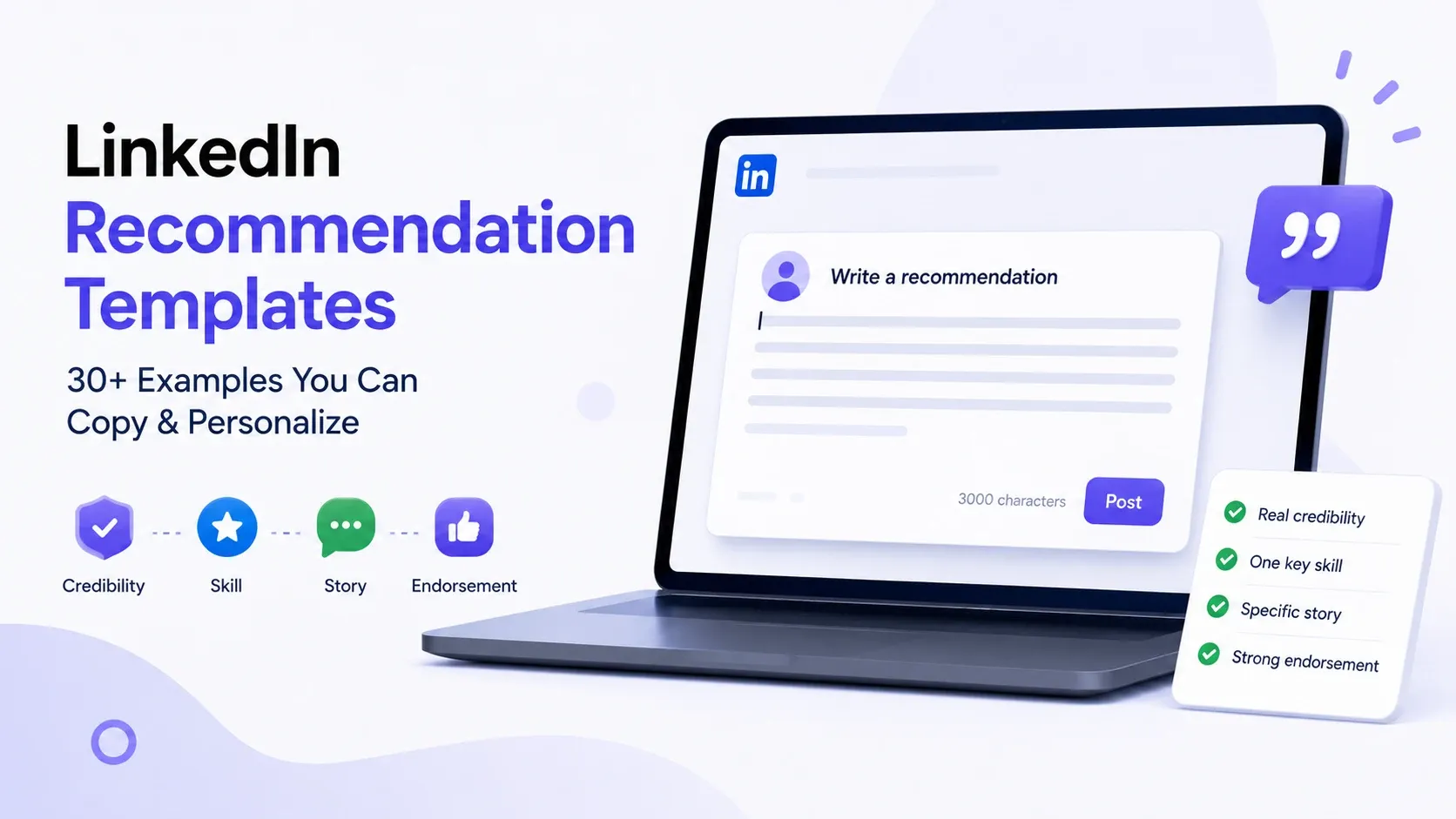
The best LinkedIn recommendation templates follow one simple four-part structure (credibility, skill, story, endorsement). Adapt any of the 30+ examples below for almost any working relationship in under two minutes.
TL;DR
- → Best structure = credibility + one specific skill + one story with a number + forward-looking endorsement
- → LinkedIn recommendations have a hard 3,000-character limit, so tighter almost always wins
- → 30+ ready templates below, organized by relationship: manager, client, freelancer, sales, and more
- → If someone hands you a blank page and asks you to write your own recommendation, there's a full section for that
- → A template only works once you swap in one real detail before you post it
What Is a LinkedIn Recommendation?
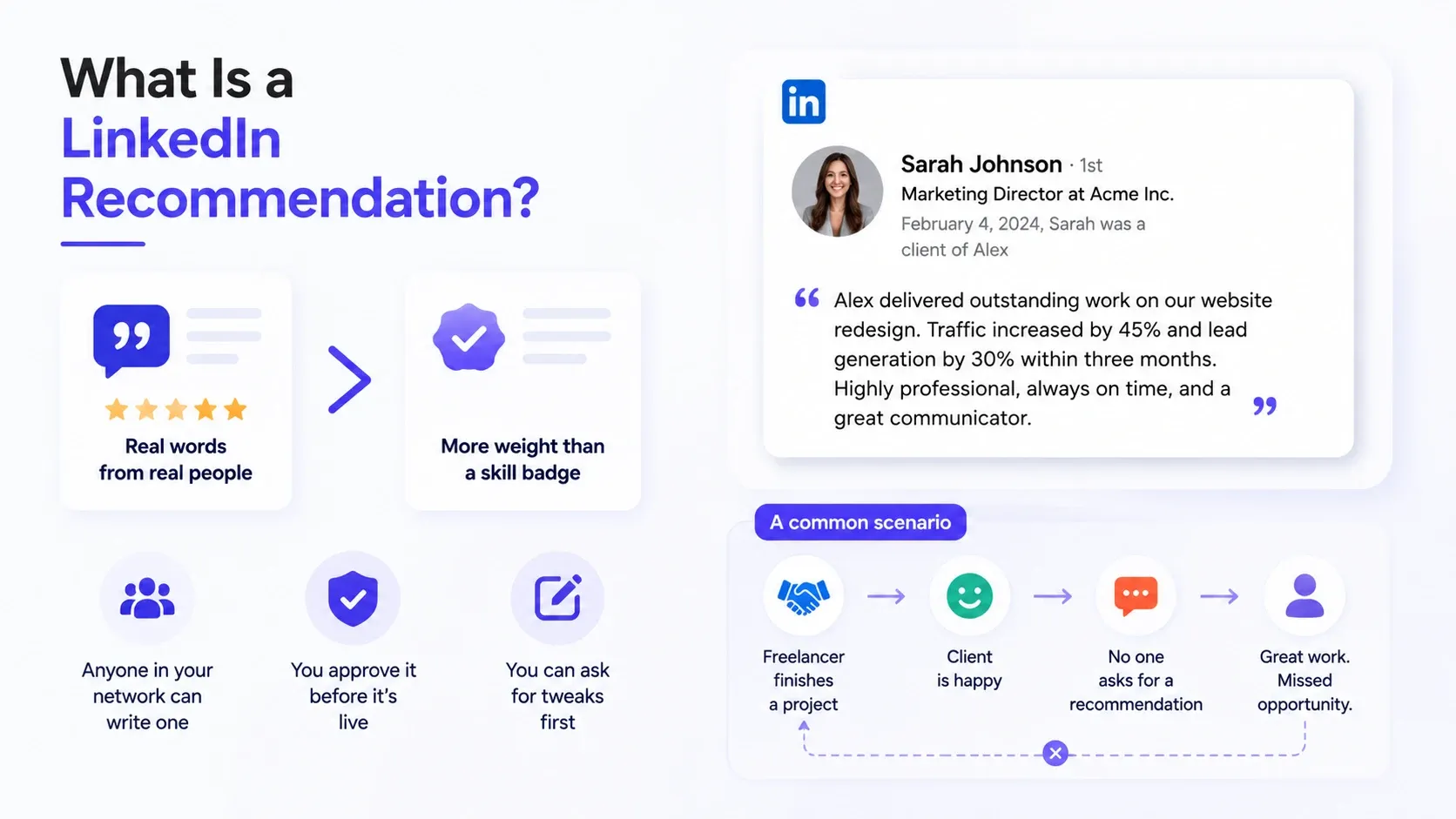
A LinkedIn recommendation is a written endorsement from a connection that appears directly on your profile.
It carries more weight than a skill badge because it's a real sentence from a real person, not a one-click tap.
Why it matters in practice:
- Candidates and freelancers get shortlisted purely because a recommendation mentioned one specific result
- Anyone in your network can write one for you
- You have to approve it before it goes live, so you can always ask the writer to tweak a line first
Here's a scenario I run into constantly:
- A freelancer finishes a project
- The client is happy
- Nothing happens, because nobody asks for the recommendation
The work was good enough to earn one. The ask just never got made. That gap alone is why so many strong profiles look thinner than the actual track record behind them.
Recommendation vs. Skill Endorsement: What's the Difference?

A recommendation is a full written paragraph you approve before it appears. A skill endorsement is a one-click tap on a listed skill, no writing involved.
| Recommendation | Skill Endorsement | |
|---|---|---|
| Effort | Real writing, takes a few minutes | One click, takes a second |
| Content | Full paragraph with real context | Just a skill name, no context |
| Approval | You review and approve before it's public | Appears instantly, no approval step |
| Credibility | High, reads as genuine proof | Low, reads as background noise |
| Reader behavior | Recruiters and prospects actually read it | Recruiters glance at the count for a few seconds |
Quick comparison:
- Effort: recommendations take real writing, endorsements take one click
- Credibility: recommendations include real context, endorsements are just a tally
- Reader behavior: a recruiter glances at endorsement counts for two seconds, then actually reads a recommendation
If you only have time to collect one type this quarter, collect recommendations. Endorsements pile up on their own once your network grows.
Why LinkedIn Recommendations Still Matter
Recommendations are third-party proof. Nobody trusts your own summary section as much as they trust someone else vouching for you.
What I see repeatedly with clients:
- Prospects check recommendations before almost anything else on a profile
- This is especially true in service-based industries, where trust is the entire sales cycle
- A profile with three to five specific recommendations reads as established
- A profile with zero reads as new, even with ten years of real experience behind it
This isn't just a job-seeker feature. Agency owners, freelancers, consultants, and sales professionals lean on it just as hard, because a recommendation from a real client does trust-building work a cold pitch never can.
Mini case study:
An agency client's cold outreach reply rate barely moved for months. The one change that actually shifted replies wasn't a new opening line. It was pinning two client recommendations to the top of the profile before the next outreach batch went out. Same message, same targeting, noticeably warmer replies.
The 4-Part Formula Behind Every Strong Recommendation
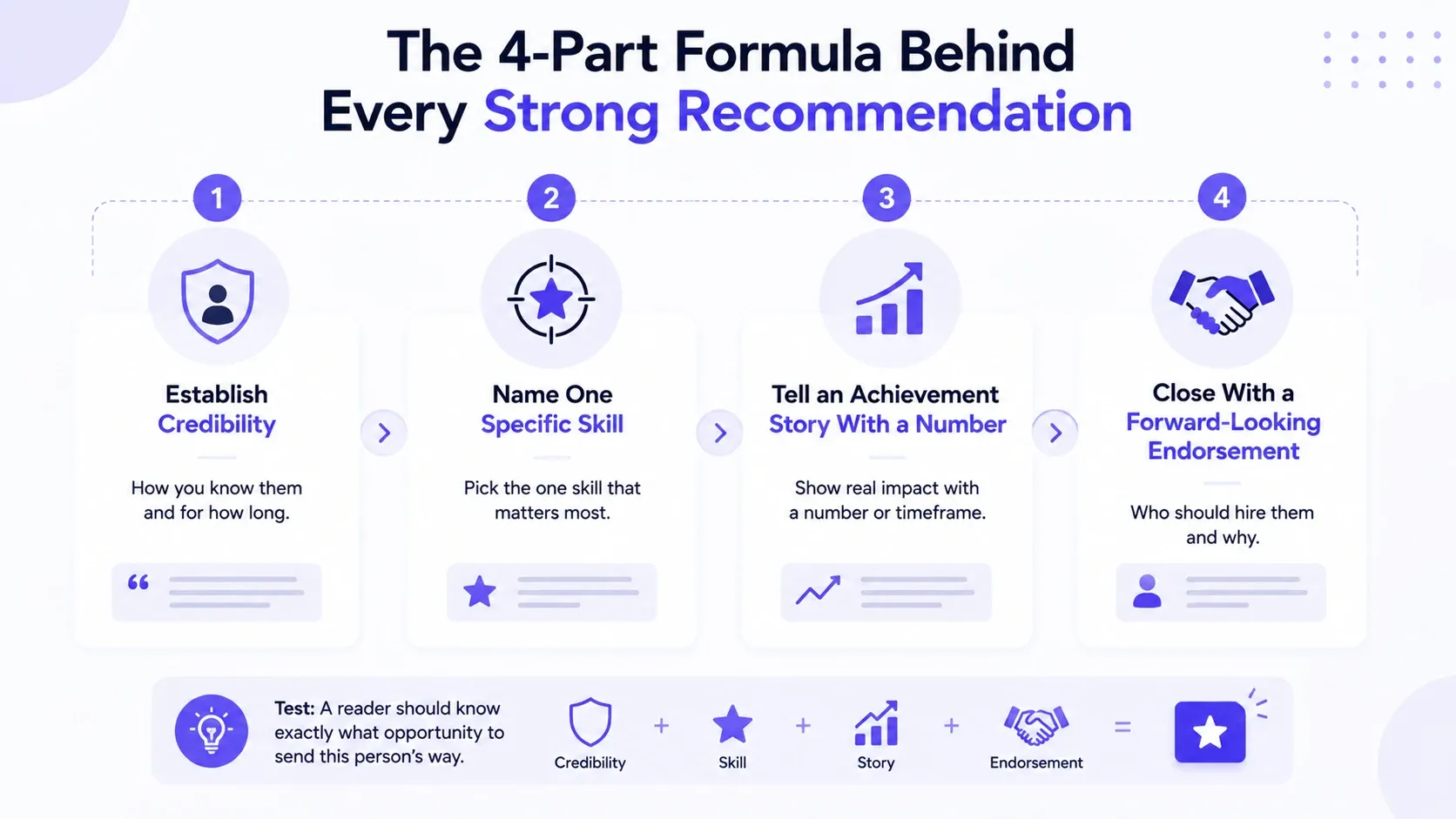
Every recommendation I've written that actually got read follows the same four beats. Skip any one of them and it becomes forgettable.
Part 1: Establish Credibility
Open with how you know the person and for how long.
- Example: "I managed Sarah for two years at [Company]"
- This tells the reader why your opinion should count in the first place
- One sentence is enough, don't spend three lines on backstory
Part 2: Name One Specific Skill
Pick one skill, not five.
- Weak: "great at everything"
- Strong: "exceptional at technical writing under deadline pressure"
- Ask yourself: which single skill would this person's next manager or client actually want to know about? Lead with that.
Part 3: Tell an Achievement Story With a Number
This is the part almost everyone skips, and it's what actually makes a recommendation memorable.
- Weak: "did great work"
- Strong: "rebuilt our onboarding flow and cut support tickets by 22%"
- No exact number on hand? Use a timeframe instead: "closed the migration two weeks ahead of a tight deadline" still reads as concrete
Part 4: Close With a Forward-Looking Endorsement
End with who should hire or work with this person and why.
- Fine: "any team would be lucky to have her"
- Better: "any sales team scaling outbound should have him on the call"
- Test: a reader who finishes your recommendation should know exactly what opportunity to send this person's way
Ask politely and get a LinkedIn profile URL from the person you are recommending to avoid tagging the wrong account.
30+ LinkedIn Recommendation Templates by Relationship
Pro tip: swap the bracketed detail for something real before you post. A template with a genuine number reads as authentic. A template that still has the brackets in it reads as exactly what it is.
I organized these by relationship, because that's genuinely how people search for them, not by industry or job title.
For a Manager or Supervisor
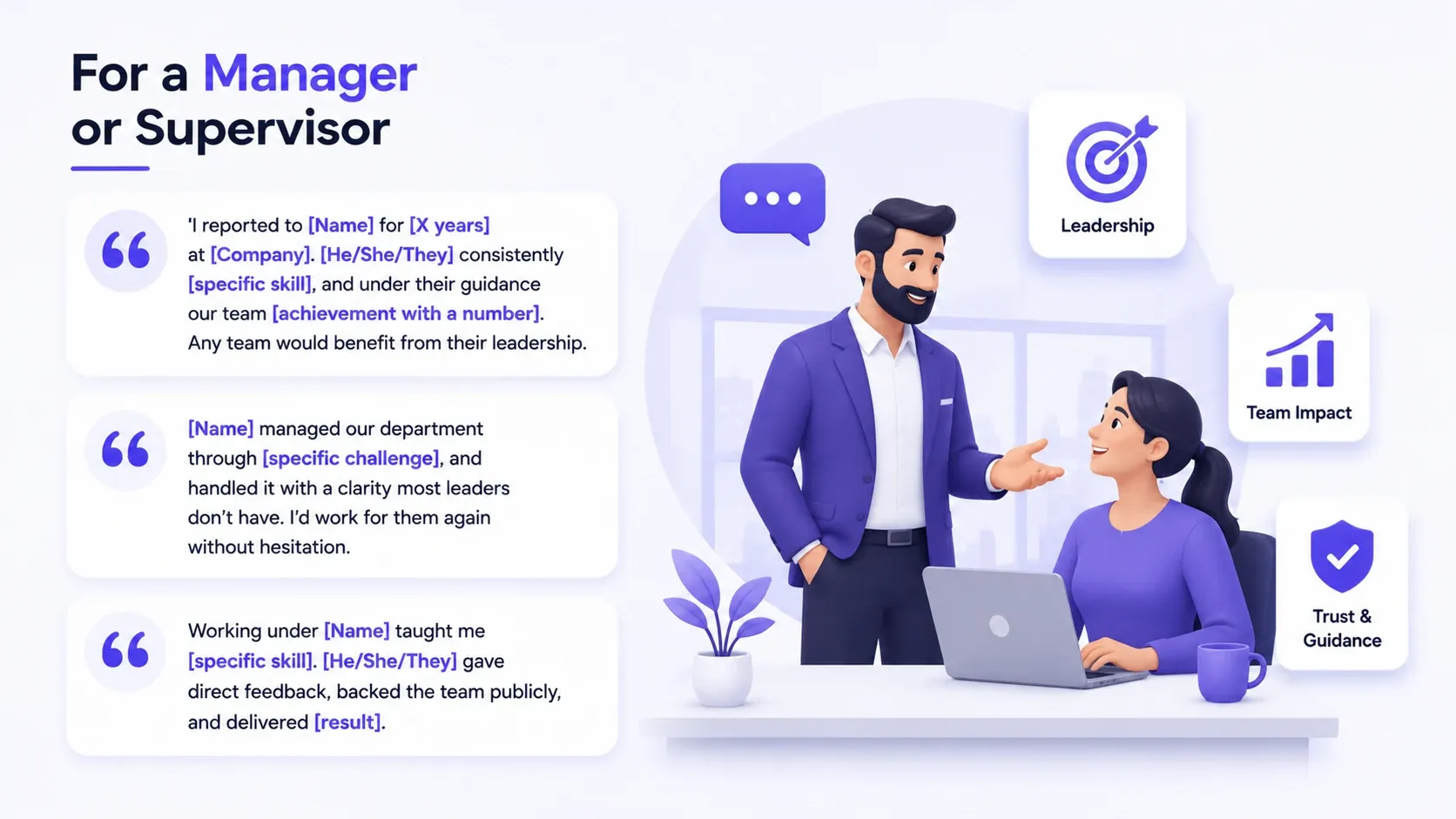
- "I reported to [Name] for [X years] at [Company]. [He/She/They] consistently [specific skill], and under their guidance our team [achievement with a number]. Any team would benefit from their leadership."
- "[Name] managed our department through [specific challenge], and handled it with a clarity most leaders don't have. I'd work for them again without hesitation."
- "Working under [Name] taught me [specific skill]. [He/She/They] gave direct feedback, backed the team publicly, and delivered [result]."
For a Peer or Colleague
- "[Name] and I worked side by side on [project] for [X time]. They're the person you want on a deadline crunch, calm and sharp under pressure."
- "I've rarely worked with someone as reliable as [Name]. On [project], they caught an issue that would've cost us [impact], and fixed it before it became a problem."
- "[Name] made our cross-team project on [topic] genuinely easier. Clear communicator, fast turnaround, zero drama."
For a Direct Report or Employee
- "I managed [Name] for [X years], and they grew from [starting point] to [outcome] in that time. Promoted twice under my watch, and earned every one."
- "[Name] took ownership of [project] with zero hand-holding and delivered [result]. That kind of initiative is rare at any level."
- "Watching [Name] develop into [role] has been one of the genuine highlights of managing this team."
For a Client or Customer
- "[Name]'s agency handled our [service] for [X months], and delivered [specific result]. Communication was clear at every single stage."
- "We hired [Name] for [project], expecting solid work. We got [specific outcome], ahead of schedule and under budget."
- "[Name] understood our [industry] problem faster than any vendor we'd worked with before them."
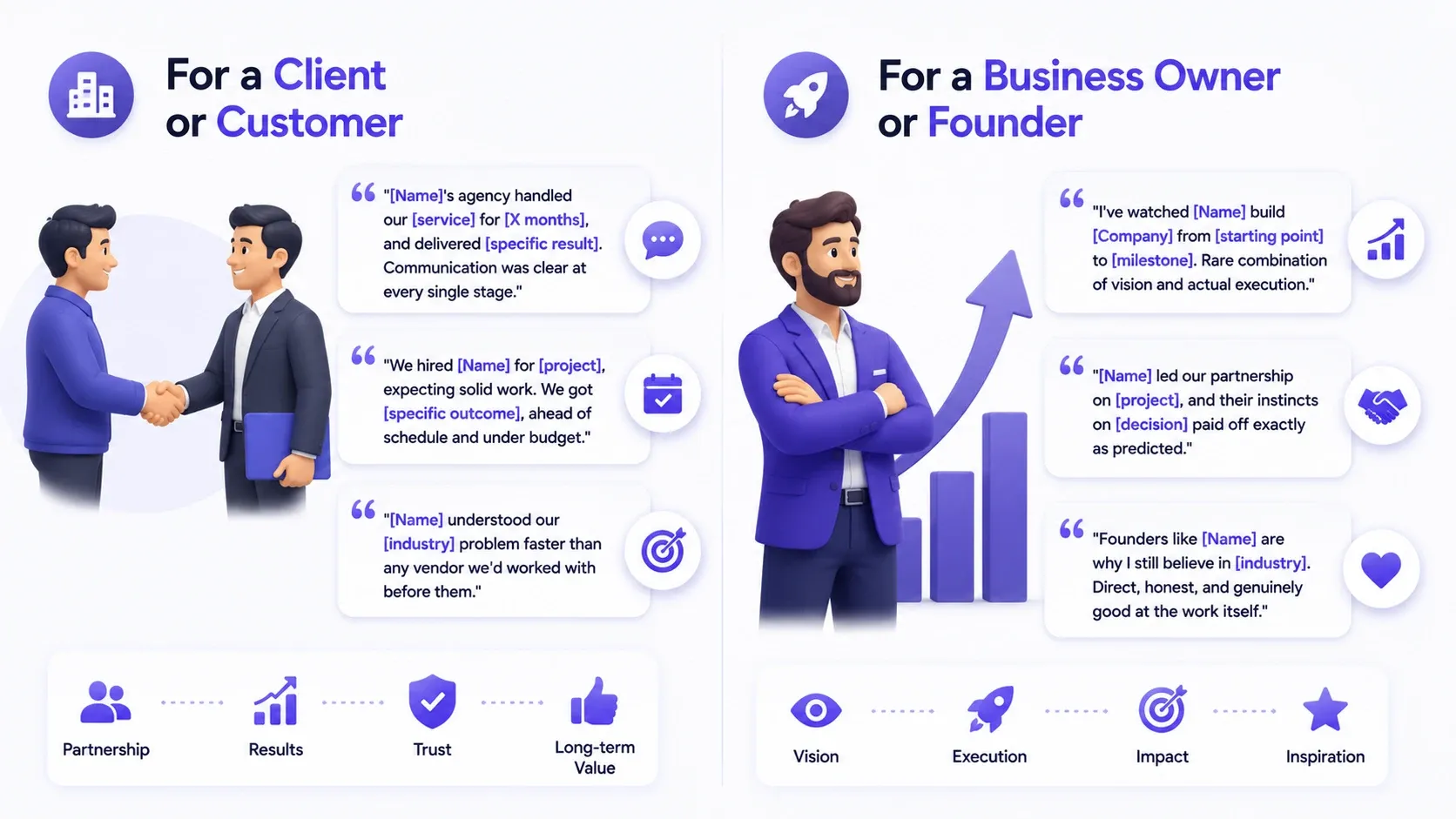
For a Business Owner or Founder
- "I've watched [Name] build [Company] from [starting point] to [milestone]. Rare combination of vision and actual execution."
- "[Name] led our partnership on [project], and their instincts on [decision] paid off exactly as predicted."
- "Founders like [Name] are why I still believe in [industry]. Direct, honest, and genuinely good at the work itself."
For a Freelancer, Consultant, or Agency Partner
- "[Name] ran our [service, e.g. LinkedIn outbound] for [X months] and delivered [specific metric, e.g. 40 qualified leads]. Zero babysitting required."
- "As a consultant, [Name] diagnosed our [problem] on the first call and had a working plan by the second."
- "We've worked with three agencies on [service]. [Name]'s was the only one that hit every single deadline."
For a Sales or Business Development Professional
- "[Name] booked [X number] qualified meetings for our team in [timeframe], and the pipeline quality was noticeably higher than average."
- "Watching [Name] handle objections on a call is a masterclass. Never pushy, always closes with the client feeling good about it."
- "[Name] took over a cold territory and turned it into [result] within [timeframe]. That's not luck, that's process."
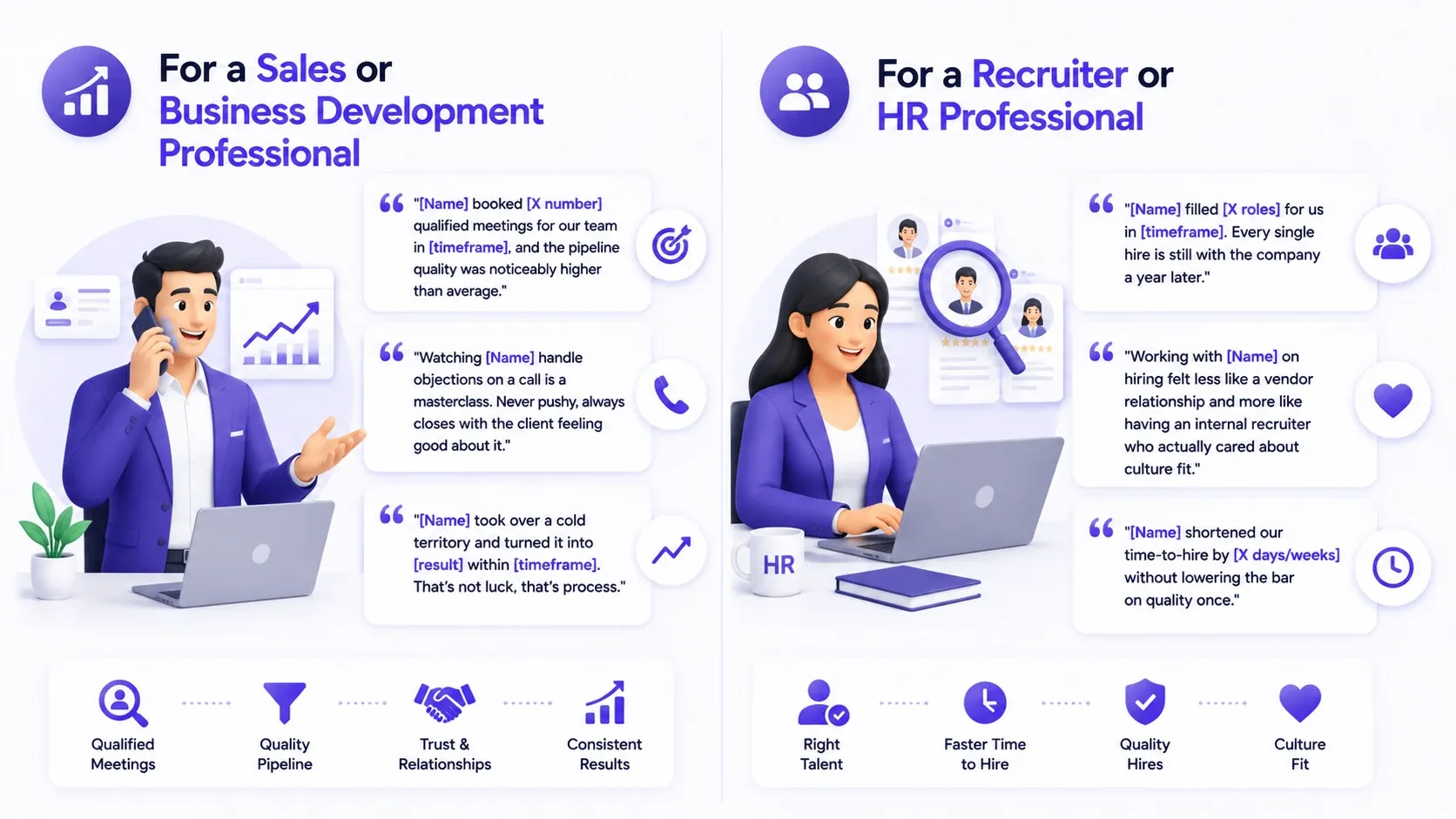
For a Recruiter or HR Professional
- "[Name] filled [X roles] for us in [timeframe]. Every single hire is still with the company a year later."
- "Working with [Name] on hiring felt less like a vendor relationship and more like having an internal recruiter who actually cared about culture fit."
- "[Name] shortened our time-to-hire by [X days/weeks] without lowering the bar on quality once."
For a Mentor or Advisor
- "[Name] mentored me through [challenge], and the advice on [specific topic] changed how I approach [skill] entirely."
- "Every call with [Name] left me with one clear next step. That's rare in mentorship, and it's why I still recommend them today."
- "[Name] pushed back on my thinking exactly when I needed it, then backed me completely once the decision was made."
For an Intern or Student
- "[Name] joined us as an intern and left having shipped [project/result], well beyond what we expected at that level."
- "[Name]'s curiosity and speed of learning stood out immediately. Asked better questions than some full-time hires do."
- "In [X weeks], [Name] went from asking basic questions to owning [task] independently. That trajectory says everything."
Bonus: For a Long-Term Business Partner
- "[Name] and I have worked together across [X years] and [X projects]. Consistency like that is the actual definition of a good partner."
How Do You Actually Post a Recommendation on LinkedIn?
Writing the text is the hard part. Posting it takes under a minute once you know where the button lives.
- Go to the person's profile and scroll to the Recommendations section
- Click the three-dot menu or "Recommend" option near that section
- Select the relationship type and how long you've known them
- Paste your written recommendation into the text box
- Submit it, it lands in their pending queue for approval
The recommendation won't show publicly until the recipient approves it.
Worth mentioning to whoever you just wrote one for, since some people never check that pending queue.
How to Write a Recommendation When Someone Asks You to Draft It
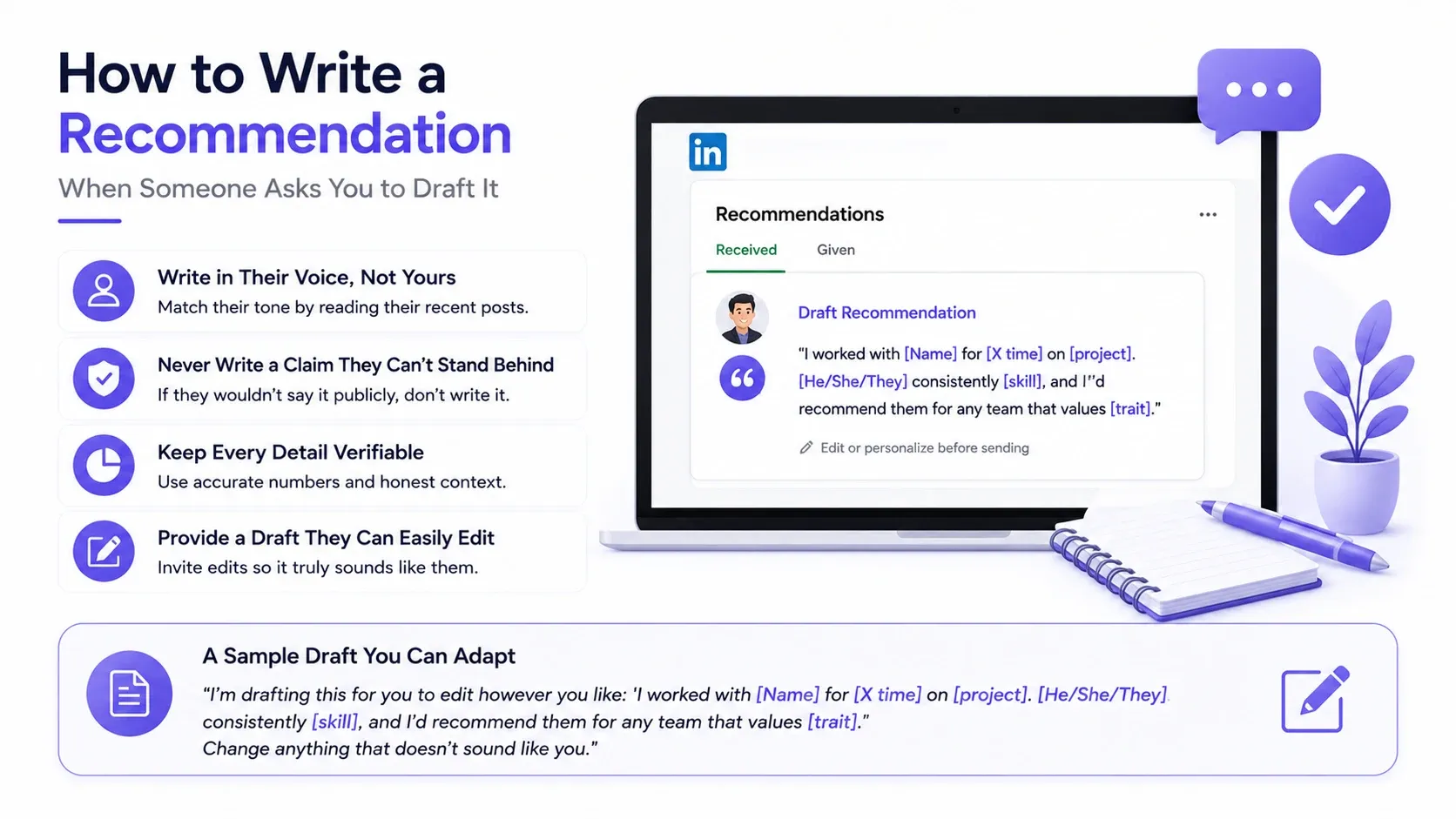
Most people who ask for a recommendation also hand you a blank page and ask you to write it yourself. That's normal, not lazy, and there's a right way to do it.
Write in Their Voice, Not Yours
- Formal person, formal draft. Casual writer, casual tone.
- Read their last few posts before you draft anything, it takes two minutes
- Never write a claim they can't stand behind once it's public, their name goes on it, not yours
- Keep every detail verifiable. Write "increased revenue by 30%" when the real number was 12%, and you've handed them a claim they'll have to quietly correct
A Sample Draft You Can Adapt
"I'm drafting this for you to edit however you like: 'I worked with [Name] for [X time] on [project]. [He/She/They] consistently [skill], and I'd recommend them for any team that values [trait].' Change anything that doesn't sound like you."
Send it with that explicit invitation to edit. One line like that removes almost all the awkwardness.
How Long Can a LinkedIn Recommendation Be?
LinkedIn caps recommendations at 3,000 characters, the same hard limit as a standard feed post. That's more room than most examples online suggest.
Short is still the smarter move:
- Three to five tight sentences with one real detail beat three paragraphs of vague praise
- Length was never the goal, specificity is
- Drafting in a notes app first? Aim to land under 800 characters before you even think about the 3,000 ceiling
- You'll almost always cut more than you add during editing
Common Mistakes That Make a Recommendation Sound Generic
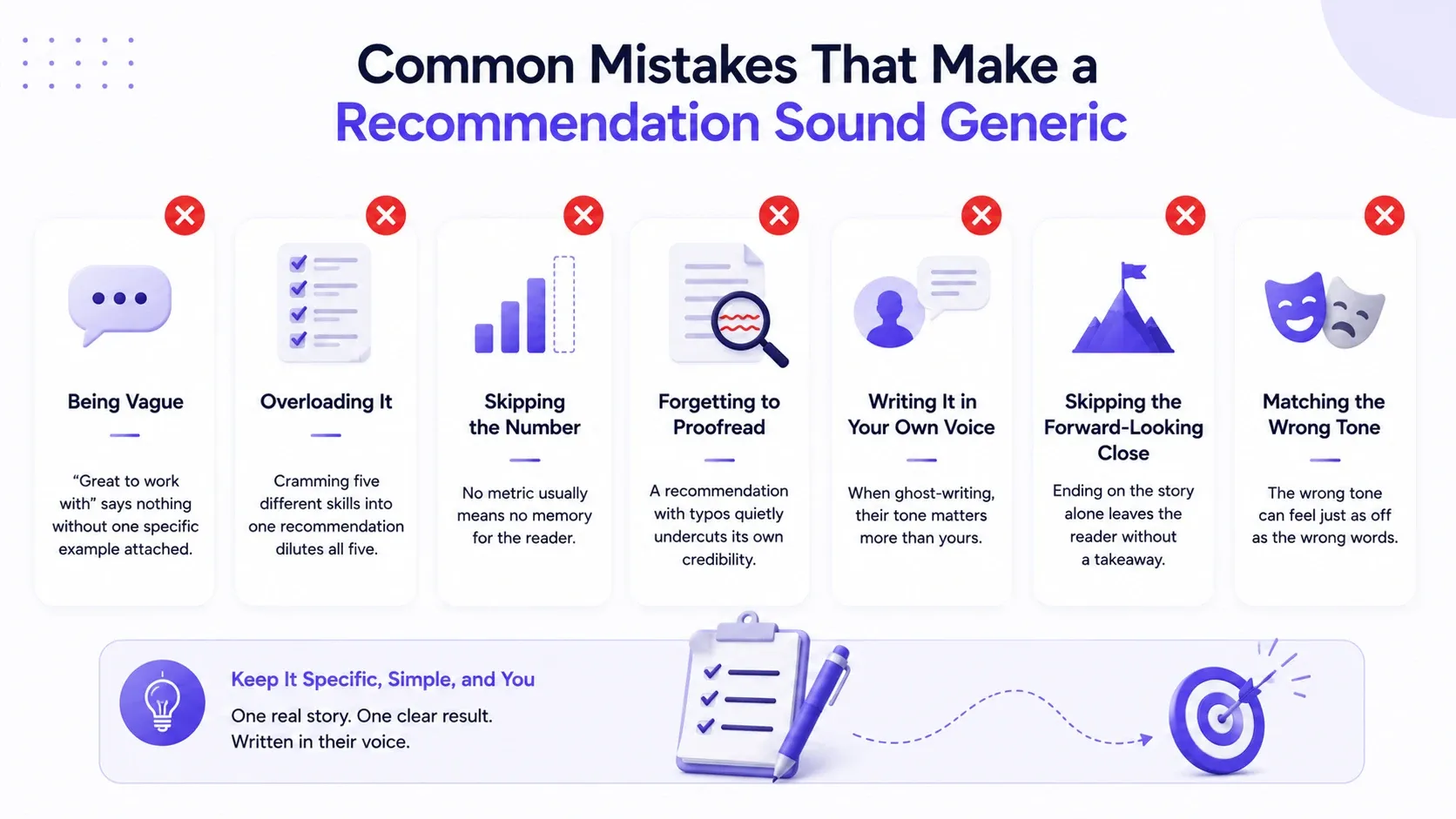
- Being vague: "great to work with" says nothing without one specific example attached
- Overloading it: cramming five different skills into one recommendation dilutes all five
- Skipping the number: no metric usually means no memory for the reader
- Forgetting to proofread: a recommendation with typos quietly undercuts its own credibility
- Writing it in your own voice: when ghost-writing for someone else, their tone matters more than yours
- Skipping the forward-looking close: ending on the story alone leaves the reader without a takeaway
- Matching the wrong tone: an overly formal recommendation for a casual, creative role reads just as off as a casual one for a legal or finance role
Before and After: Turning a Template Into a Real Recommendation
A template only becomes a recommendation once you fill in one real detail. Here's exactly what that swap looks like.
Template (Peer or Colleague):
"[Name] and I worked side by side on [project] for [X time]. They're the person you want on a deadline crunch, calm and sharp under pressure."
Personalized:
"Priya and I worked side by side on our Q3 product launch for eight months. She's the person you want on a deadline crunch, calm and sharp under pressure, and the launch shipped two days early because of her."
What changed, and why it matters:
- Name: placeholder became a real name, first sign this isn't copy-pasted
- Project: "[project]" became "Q3 product launch," specific enough to be checked
- Timeframe: "[X time]" became "eight months," a real number instead of a blank
- Outcome: one closing detail added, "shipped two days early," which is the achievement story from Part 3 of the formula
Same structure, four small edits, and it reads like a completely different sentence. That's the whole exercise. Run every template above through this same swap before you post it.
Want to Ask for One Instead?
Writing a recommendation and requesting one are two different messages, with their own timing and wording rules.
How to Ask for a LinkedIn Recommendation covers the request side in full, so this piece stays focused on the writing itself.
Managing LinkedIn Activity Across Multiple Accounts
Writing one great recommendation by hand is manageable when you're working with one LinkedIn account. It becomes much harder when you're managing outreach and profile activity across multiple clients or accounts.
- Bearconnect helps agencies and sales teams manage multiple LinkedIn accounts from one place.
- Teams can coordinate outreach, manage conversations, and keep client activity organized without jumping between accounts.
- Actions such as connection requests, follow-ups, profile views, and other LinkedIn activities can be built into workflows.
- Personalization can still be added to messages using details such as first name, company, and role, without requiring every message to be written from scratch.
FAQs
1. Can I edit a LinkedIn recommendation after it's posted?
No, only the original writer can edit it once it's live. You can ask them to revise it directly, or hide it from your profile without deleting it.
2. How many recommendations should I have on LinkedIn?
Three to five well-written ones consistently outperform a dozen generic ones. Quality and specificity matter more than the total count.
3. Can I write a recommendation for myself?
No, LinkedIn only allows recommendations from other connections. You can draft one for someone else to post about you, if they've asked.
4. Do recommendations affect LinkedIn's search ranking?
Not directly for SEO, but strong recommendations get more profile views and higher connection acceptance rates, which indirectly boosts visibility.
5. What's the ideal length for a LinkedIn recommendation?
Three to five specific sentences, well under the 3,000-character limit. Specificity beats raw length every time.
Final Thought
The best recommendation isn't the longest one. It's the one with a real number in it.
Pick a template above, swap in one true detail, and send it today. If you found this useful, the next logical read is how to actually request one without sounding awkward. To know more read How to Ask for a LinkedIn Recommendation
Ready to Transform Your LinkedIn Strategy?
Join thousands of professionals already using Bearconnect to automate their outreach and grow their network.
7-day free trial • Cancel anytime
Related Articles
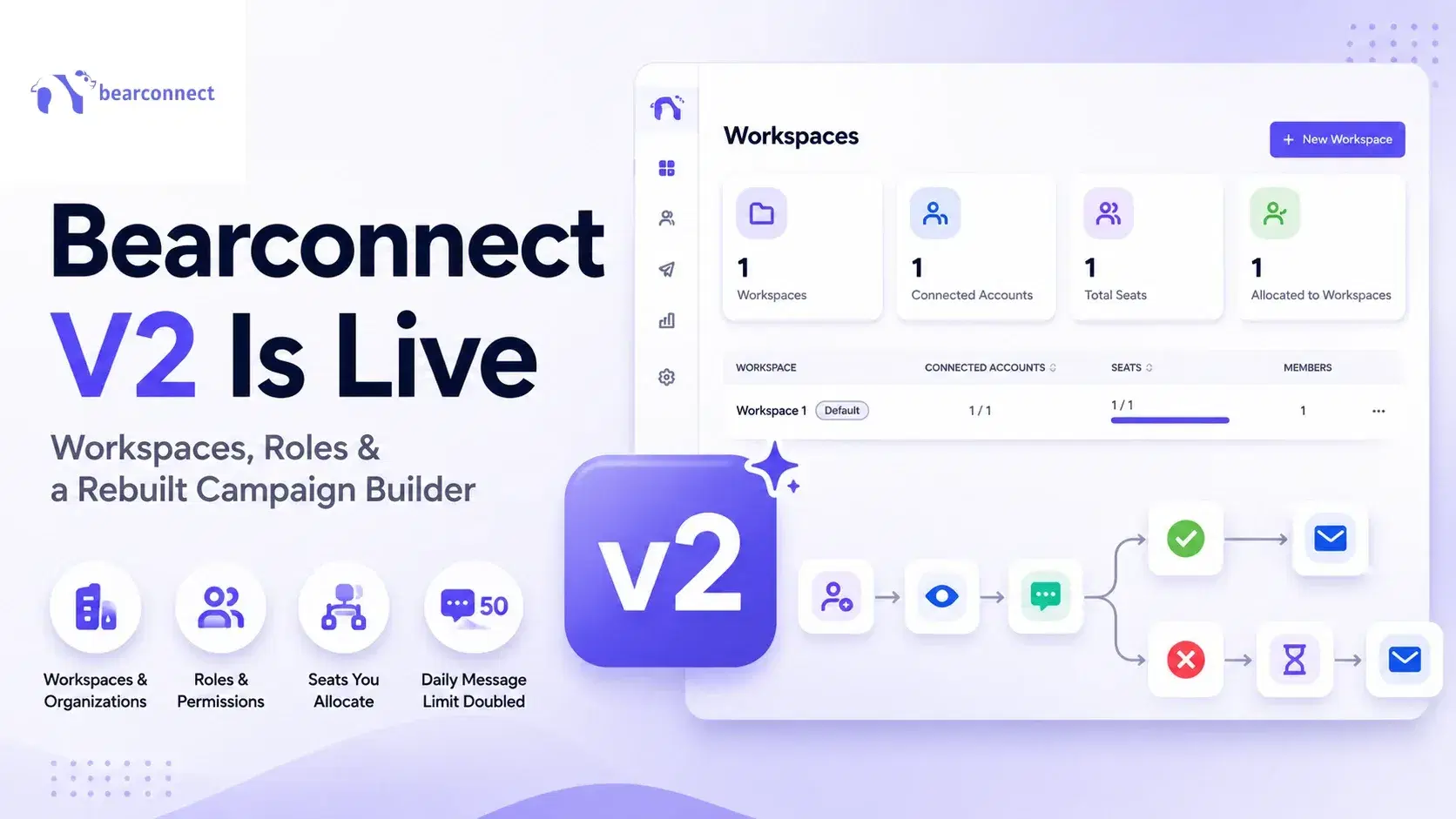
Bearconnect V2 Is Live: Workspaces, Roles and a Rebuilt Campaign Builder
Bearconnect V2 introduces dedicated workspaces, flexible roles, and a rebuilt campaign builder, giving agencies and sales teams more control over every LinkedIn account they manage.
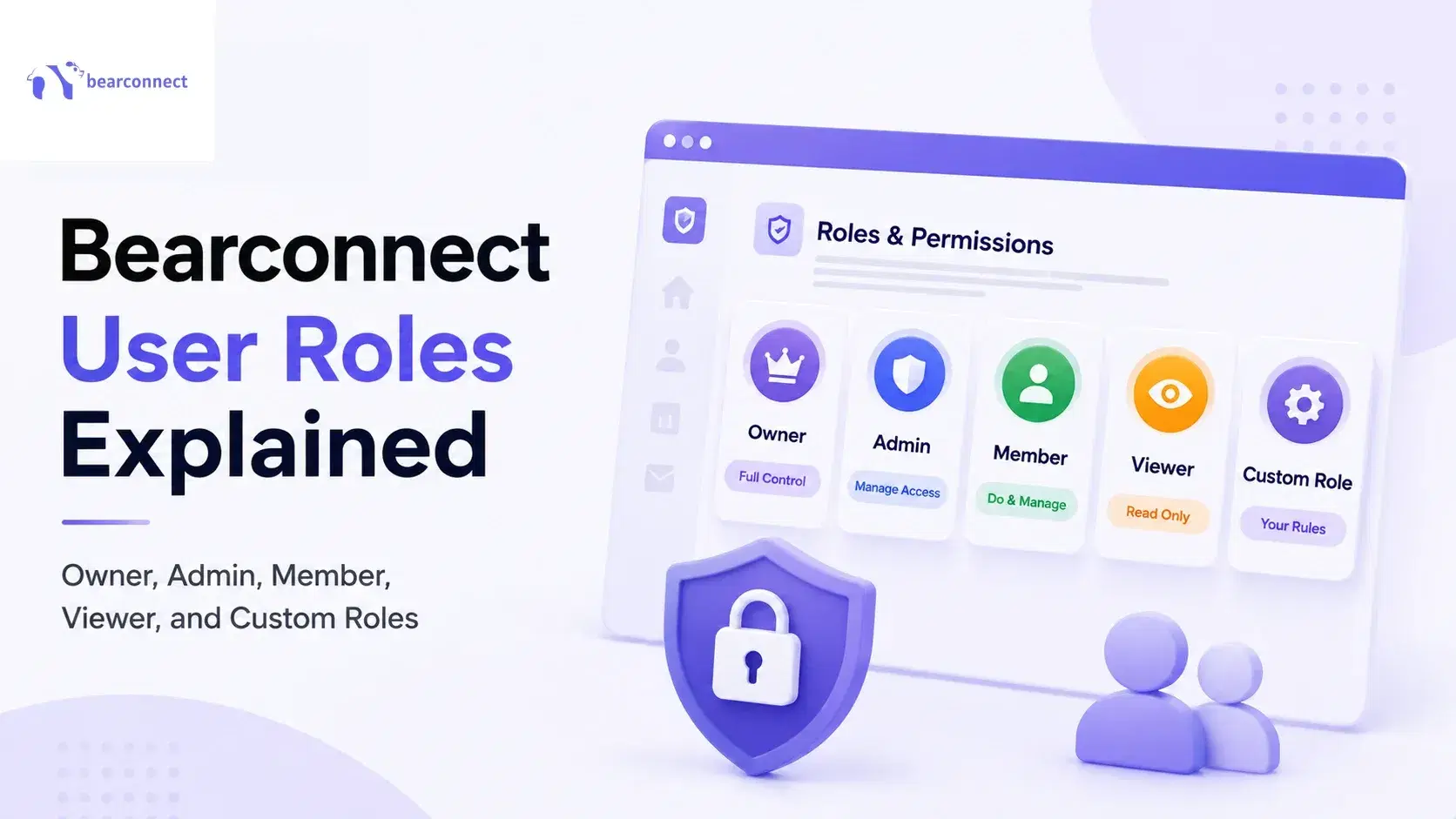
Bearconnect User Roles Explained: Owner, Admin, Member, Viewer, and custom roles
Bearconnect gives you four built-in roles, Owner, Admin, Member and Viewer, plus custom roles you build yourself. This guide breaks down exactly what each role can access,
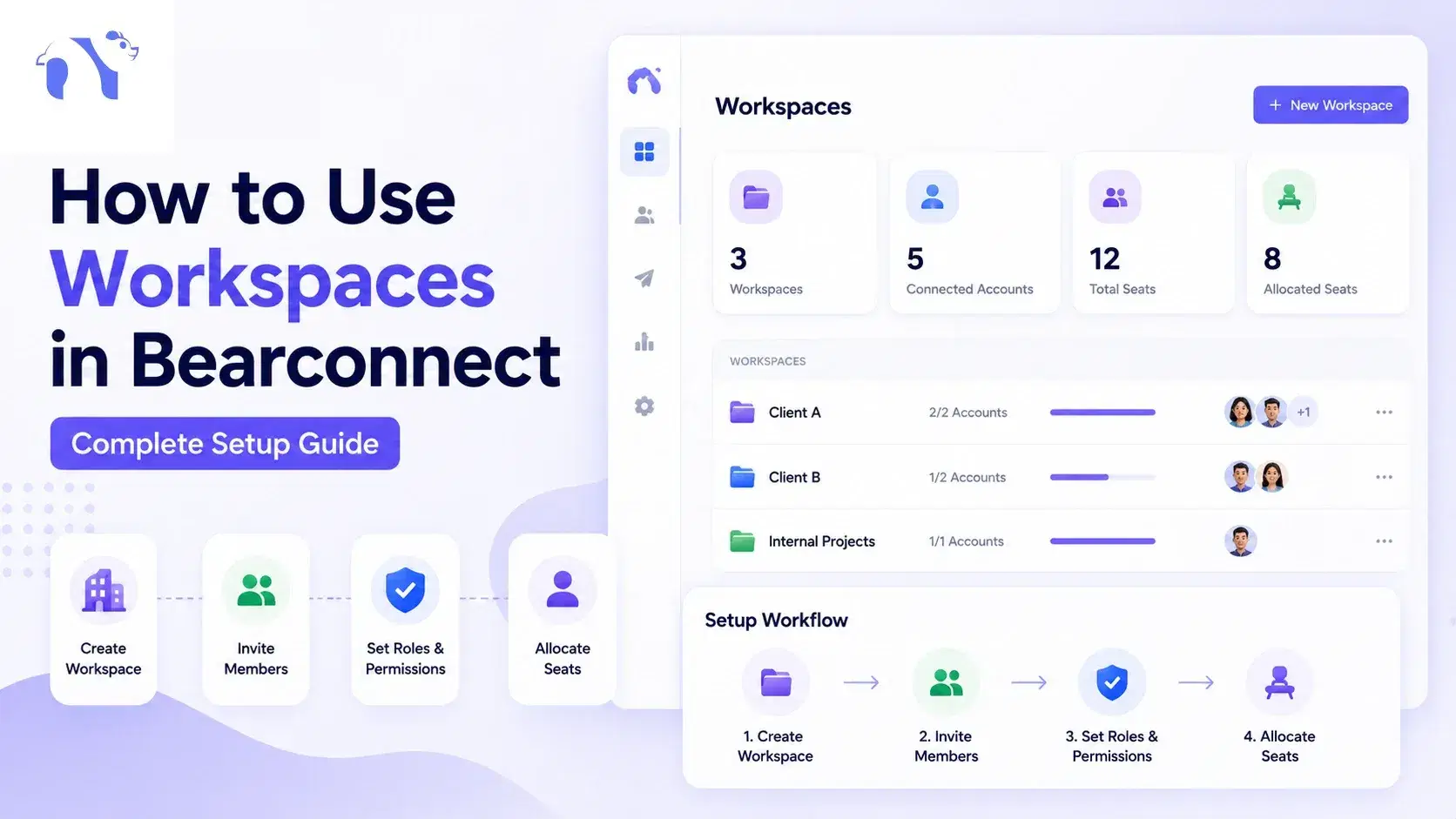
How to Use Workspaces in Bearconnect: Complete Setup Guide
To use workspaces in Bearconnect, sign up or log in, then go to Settings > Workspaces. TL;DR: Workspace Setup in 4 Steps * Create → Settings > Workspaces > + New Workspace = a fresh environment with its own campaigns and inbox * Allocate → three dots > Edit > allocate seats = the workspace can now hold a LinkedIn account * Connect → LinkedIn > Add Account inside that workspace = outreach runs in isolation * Invite → Settings > Members > invite by email with a role = no password sharing, e